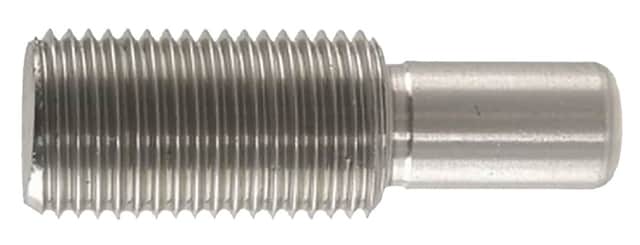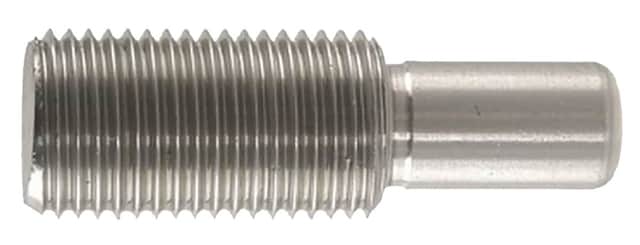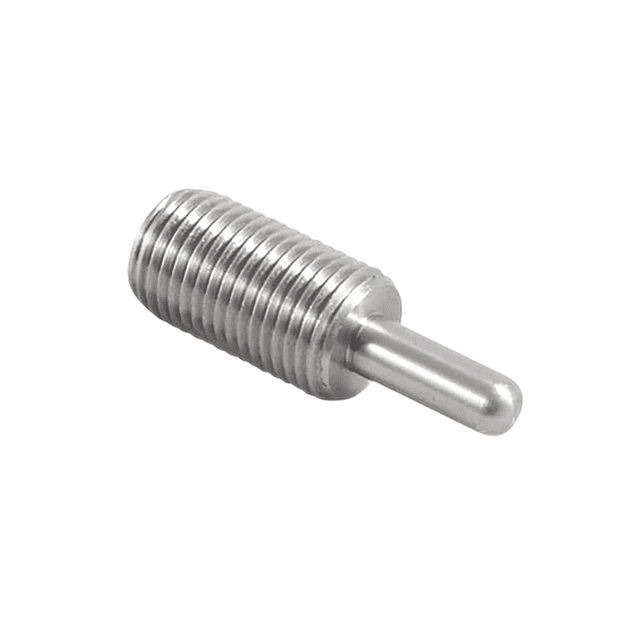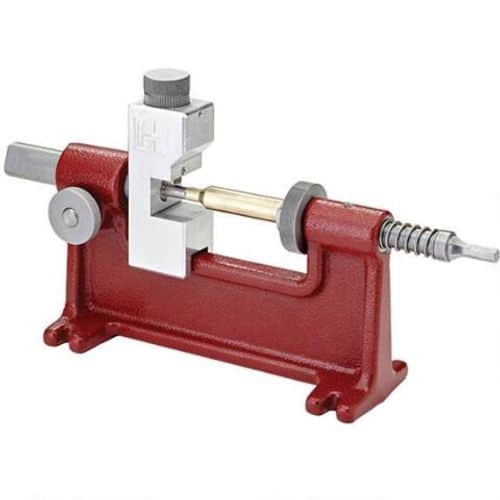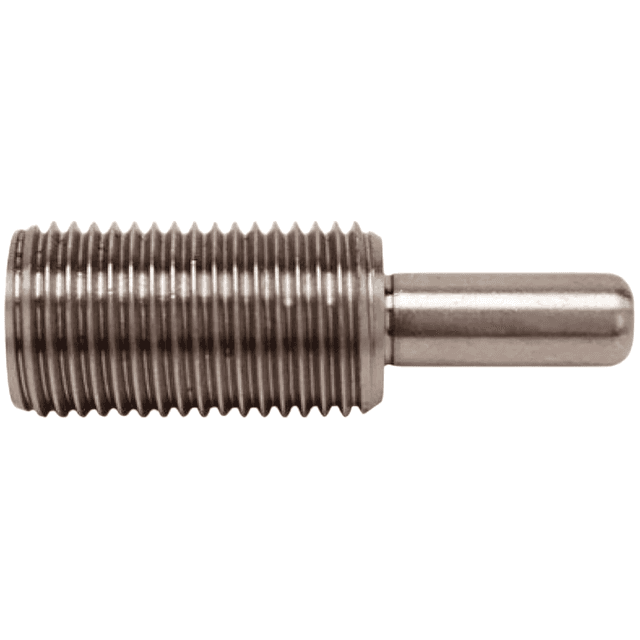































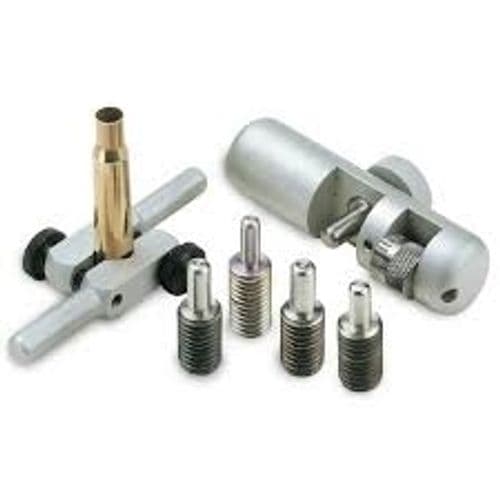

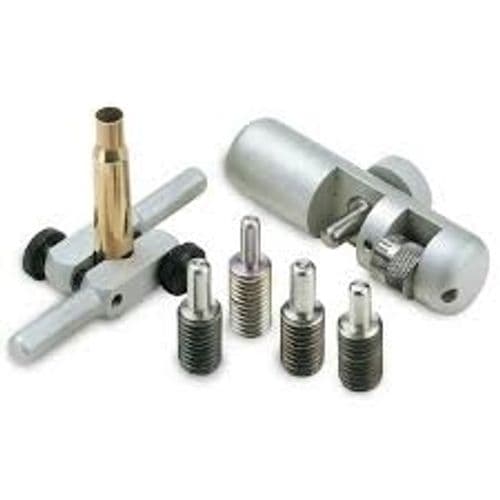
Hornady Neck Turning Tool
$49.99

The Hornady Neck Turning Tool: Unlocking Ammunition's True Potential
The pursuit of ballistic excellence is a journey paved with meticulous attention to detail, and for the serious handloader, the quest for ultimate precision often leads to the critical practice of case neck turning. At the heart of this exacting process lies a tool engineered for uncompromising uniformity: the Hornady Neck Turning Tool. This essential piece of reloading equipment isn't just another accessory; it's a gateway to unlocking your ammunition's true potential, ensuring your handloads consistently deliver unparalleled accuracy downrange.
The Foundation of Precision: Why Case Neck Uniformity Matters
Imagine a symphony orchestra where each instrument's note is slightly off-key. The resulting sound would be discordant and unpredictable. Similarly, in reloading, minute inconsistencies in your brass, particularly in the case neck, can introduce subtle yet significant variations that undermine accuracy. Case necks, especially after multiple firings and resizing operations, can develop uneven thickness around their circumference. This non-uniformity creates several critical problems for the precision reloader:
- Inconsistent Bullet Seating: A varying neck thickness means the bullet encounters different resistance as it's seated into the case. This leads to inconsistent seating depths, which directly impacts bullet runout and overall cartridge length. Even a few thousandths of an inch deviation can disrupt the bullet's flight path.
- Varying Neck Tension: Neck tension, the grip the case neck exerts on the bullet, is paramount for consistent ignition and predictable muzzle velocities. Uneven neck thickness results in uneven neck tension. If the tension is too loose in one spot and too tight in another, the bullet's release from the case upon firing becomes erratic, leading to variations in muzzle velocity, which translates to vertical stringing on target.
- Compromised Concentricity: Concentricity refers to how perfectly centered the bullet is within the case neck. When the neck wall is not uniform, it's virtually impossible to achieve perfect concentricity. A bullet that is seated off-center will yaw or wobble as it exits the barrel, severely degrading accuracy and making consistent group sizes nearly unattainable.
- Increased Extreme Spread (ES) and Standard Deviation (SD): These are critical metrics for serious shooters, measuring the consistency of muzzle velocities. Inconsistent neck tension and bullet seating are major contributors to higher ES and SD values. Lower ES and SD numbers indicate more predictable ballistic performance, which is vital for long-range shooting where even small velocity variations can result in significant point-of-impact shifts.
For competitive shooters, long-range enthusiasts, and hunters who demand ethical, precise shot placement, mitigating these variables isn't just about improvement; it's about achieving peak performance. This is where a dedicated neck turning tool, like the Hornady, becomes an indispensable asset.
Introducing the Hornady Neck Turning Tool: Your Precision Partner
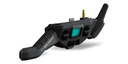
The Hornady Neck Turning Tool (SKU 041222, UPC 090255412222) is meticulously designed to address these challenges head-on. It empowers the reloader to meticulously trim the outside of case necks to absolute, micrometer-level uniformity. This process ensures that every case neck is perfectly concentric and possesses consistent wall thickness, creating the ideal environment for optimal bullet seating and consistent neck tension.
Hornady has long been a trusted name in the reloading community, synonymous with innovation, quality, and precision. Their Neck Turning Tool embodies this legacy, providing a robust, reliable, and highly accurate solution for a critical case preparation step. It’s a testament to their commitment to helping handloaders achieve the tightest possible groups and the most consistent ballistic performance.
Unleashing Unrivaled Precision: Key Features & Benefits
What sets the Hornady Neck Turning Tool apart, making it an essential addition to any serious reloader's bench?
- Micro-Adjustable Cutter for Unprecedented Control: This is the cornerstone feature of the Hornady tool. The cutter adjusts in incredibly fine 1/1000" (one-thousandth of an inch) increments. This minute adjustability provides the reloader with absolute control over the final neck wall thickness. Such precision is crucial because even a tiny variation can impact neck tension and bullet release. This granular control allows you to dial in your case necks to match the exact requirements of your chamber and projectile, optimizing bullet pull and ensuring uniform release.
- Achieve Absolute Uniformity: The primary purpose of this tool is to ensure the outside diameter of your case necks is perfectly consistent around the entire circumference. This uniformity is directly correlated with consistent neck tension, which in turn leads to more consistent bullet release and lower velocity spreads. When every case neck presents the same friction to the bullet, every shot begins its journey with the same initial conditions, translating directly to tighter groups.
- Superior Accuracy and Ballistic Performance: By eliminating the inconsistencies caused by uneven neck thickness, the Hornady Neck Turning Tool contributes directly to superior accuracy. Consistent neck tension means more consistent bullet seating and reduced bullet runout, leading to more predictable bullet flight and smaller group sizes. For disciplines where sub-MOA (Minute of Angle) groups are the standard, this tool is a game-changer, helping to reduce extreme spreads and standard deviations in muzzle velocity, which are critical for long-range precision.
- Enhanced Case Life and Consistency: While the primary benefit is accuracy, uniform case necks can also contribute to longer case life. By ensuring consistent resizing and preventing uneven stress on the brass during seating and firing, you might experience fewer split necks and extend the number of reloads you can get from each piece of brass. This adds an economic benefit to the performance gains.
- Designed for Ease of Use (with appropriate accessories): While neck turning is a precision operation, the Hornady tool is designed with the user in mind. It integrates seamlessly with the Hornady Power Case Prep Center or can be used manually with a case holder and a drill, providing flexibility for different reloading setups. Its straightforward design allows reloaders to quickly grasp the process and achieve precise results with practice.
- Robust and Durable Construction: Crafted with Hornady's signature quality, the Neck Turning Tool is built to last. Its robust construction ensures reliable performance over countless reloading sessions, making it a valuable long-term investment for any serious handloader.
Who Needs the Hornady Neck Turning Tool?
This tool is not necessarily for every reloader, but for those dedicated to pushing the boundaries of their ammunition's performance, it becomes indispensable.
- Competitive Shooters: For disciplines like Benchrest, F-Class, PRS (Precision Rifle Series), or NRA High Power, where fractions of an inch can determine victory, uniform neck tension and minimal bullet runout are non-negotiable. The Hornady Neck Turning Tool provides the consistency required to win.
- Long-Range Enthusiasts: When shooting at 600 yards, 1000 yards, or beyond, even tiny inconsistencies are magnified. Achieving low ES and SD values is critical for predictable bullet drop and wind deflection. Neck turning with the Hornady tool helps achieve the velocity consistency needed to hit distant targets reliably.
- Hunters Demanding Ethical Precision: For hunters who aim for maximum ethical precision, especially at longer ranges or when targeting valuable game, ensuring every shot is as consistent as possible is paramount. The peace of mind that comes from knowing your ammunition is optimally prepared is invaluable.
- Reloaders Striving for Perfection: If you view reloading not just as a means to make ammunition but as a craft, and you constantly seek to improve your skills and the quality of your handloads, neck turning is a natural next step. The Hornady tool offers the precision necessary to elevate your reloading to an art form.
- Those Using "Tight Neck" Chambers: Some custom rifles feature "tight neck" chambers that require precise neck turning to ensure proper clearance and pressure. The Hornady tool is perfectly suited for these demanding applications.
Mastering the Art: How to Use the Hornady Neck Turning Tool
While simple in concept, effective neck turning requires careful setup and execution. The Hornady Neck Turning Tool is designed to make this process as intuitive as possible:
- Case Preparation: Begin with clean, deprimed, and full-length sized cases. It's often recommended to expand the case neck slightly with a mandrel before sizing to ensure the neck is perfectly round and uniform, providing a stable base for the turning operation. Some reloaders prefer to turn before full-length sizing. Experimentation based on your specific brass and die set is encouraged.
- Tool Setup:
- Insert the appropriate Hornady pilot into your case. The pilot ensures the case is perfectly centered and supported during the turning process. Pilots are caliber-specific and sold separately.
- Mount the Hornady Neck Turning Tool onto a secure platform, such as the Hornady Case Prep Trio or Hornady Power Case Prep Center, or use a manual handle that allows the tool to be rotated while the case is held.
- Insert your case (with the pilot installed) into the tool's body, ensuring the case neck is aligned with the cutter.
- Adjusting the Cutter: This is the most critical step.
- Start with the cutter retracted.
- Advance the cutter using the micro-adjustment knob in small increments (e.g., 1/1000" at a time).
- Test turn a small section of a case neck, then measure the turned area with a micrometer. The goal is to remove just enough material to achieve uniformity around the entire neck, often leaving a small "donut" of untouched original brass near the shoulder. This ensures you're only removing the high spots.
- Continue adjusting and test-turning until you achieve your desired neck wall thickness uniformly around the circumference. The ideal thickness often leaves about 75-90% of the neck turned, with a small unturned ring at the base of the neck/shoulder junction. This helps support the bullet and avoid potential pressure spikes from an internal donut forming.
- Turning the Cases: Once the cutter is precisely set, firmly hold the case (either by hand if using a power unit or with a case holder if turning manually) and rotate it against the cutter. Apply steady, even pressure. Allow the cutter to smoothly shave off the brass until the entire circumference of the neck is uniformly turned.
- Post-Turning Care: After turning, inspect each case. Clean off any brass shavings. It's often recommended to chamfer and deburr the case mouth after turning to remove any burrs and prepare the mouth for bullet seating. Finally, lightly anneal the case necks to relieve work hardening introduced by the turning process, ensuring consistent neck tension for future reloads and extending case life.
Beyond the Basics: Advanced Insights & Troubleshooting
- When is Neck Turning Truly Beneficial? While beneficial for extreme accuracy, neck turning might not be necessary for casual plinking or general hunting at moderate ranges. Its greatest impact is seen in applications requiring consistent sub-MOA precision, especially for long-range shooting where every variable must be controlled.
- Understanding Your Brass: Different brass manufacturers and even different lots from the same manufacturer can have varying neck thickness uniformity. Inspect your brass thoroughly before starting.
- Avoiding the "Donut": While turning the outside, some reloaders fear creating an "internal donut" at the neck-shoulder junction. This is typically caused by over-sizing the neck or using incorrect expander buttons. The Hornady tool, by focusing on exterior uniformity, helps manage this, but proper die setup and mandrels are also crucial.
- Measuring is Key: A high-quality micrometer is absolutely essential for setting up and verifying your neck turning operation. Consistent, accurate measurements are the only way to ensure the tool is set correctly and performing as desired.
The Hornady Advantage: Why Choose This Tool?
When investing in reloading equipment, particularly for precision work, the brand matters. Hornady's reputation for engineering excellence and quality control is well-earned. The Hornady Neck Turning Tool is not merely a piece of metal; it's a precisely crafted instrument built to Hornady's stringent standards. Its reliability and consistent performance are why it's a favored choice among reloaders serious about their craft.
Moreover, if you already utilize other Hornady reloading components—from dies to presses, bullets to brass—the Neck Turning Tool integrates seamlessly into your existing workflow. This ecosystem approach simplifies your reloading process and ensures compatibility across your equipment. You can find the genuine Hornady Neck Turning Tool, along with all your reloading needs, at DEGuns, your trusted source for premium reloading equipment.
Investing in Accuracy: The Long-Term Value
The Hornady Neck Turning Tool represents an investment, not just in equipment, but in the ultimate accuracy of your handloads. The time and effort spent on neck turning will be repaid manifold in tighter groups, more consistent velocities, and the sheer satisfaction of knowing you've left no stone unturned in the pursuit of perfection. It elevates your reloading from a chore to a highly rewarding aspect of your shooting hobby or competitive pursuit. Mastering this skill with a tool as precise as the Hornady Neck Turning Tool will undoubtedly enhance your capabilities as a reloader and a shooter, consistently pushing the boundaries of what's possible with your firearm.
Frequently Asked Questions (FAQs) About Neck Turning
- Is neck turning always necessary for reloading? No, not always. For general practice, plinking, or many hunting scenarios at moderate distances, factory-consistent brass might suffice. However, for extreme precision, competitive shooting, long-range engagements, or specialized chambers, neck turning is highly beneficial and often necessary.
- What kind of cases benefit most from neck turning? Cases that have been fired multiple times, brass from different manufacturers (which can have varying initial wall thickness uniformity), and new brass intended for highly precise applications (especially those with tight-neck chambers) benefit most.
- How often should I neck turn my cases? Typically, cases are turned once early in their life, and that uniformity is maintained through proper resizing. The turning process permanently establishes the outside neck diameter. However, annealing after a few firings can help maintain consistent neck tension.
- What additional tools are needed to use the Hornady Neck Turning Tool? You will need caliber-specific pilots (sold separately by Hornady), a way to power the tool (like the Hornady Power Case Prep Center or a manual handle/drill setup), and a high-quality micrometer to measure neck thickness accurately. Chamfer/deburr tools are also recommended for post-turning case mouth preparation.
| Feature | Description | Benefit |
|---|---|---|
| Micro-Adjustable Cutter | Adjusts in 1/1000" increments (0.001 inch). | Enables precise control over neck wall thickness for ultimate uniformity. |
| Purpose | Trims the outside of case necks. | Ensures consistent neck tension, improved concentricity, and superior accuracy. |
| Compatibility | Designed for use with Hornady Case Prep tools or manual rotation. | Flexible integration into various reloading setups. |
| SKU | 041222 | Unique product identifier. |
| UPC | 090255412222 | Universal Product Code for easy identification and purchasing. |
Specifications
Explore the specific details and characteristics
- Manufacturer
- Hornady
- Caliber
- .308 Win/7.62x51 Nato
- SKU
- 041222
- UPC
- 090255412222