




































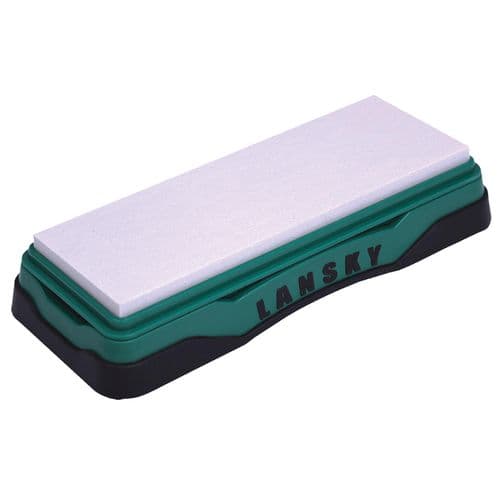

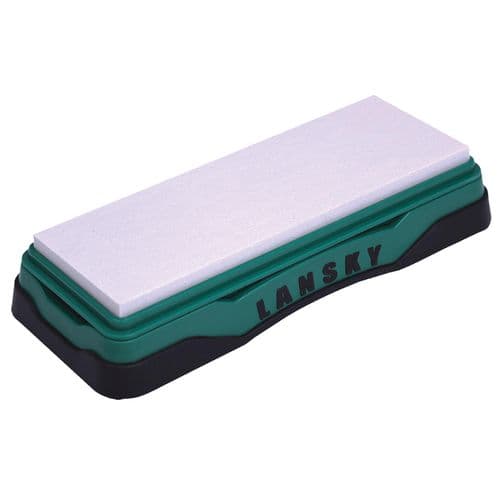
Lansky LBS6H Natural Arkansas Sharpener Hard AR Stone Walnut Block
$25.59
Please Allow 4-5 Business Days for In Store Pickup

Unlocking Unrivaled Sharpness: A Comprehensive Guide to the Lansky LBS6H Natural Hard Arkansas Sharpening Stone with Walnut Block
A truly sharp blade isn't just a luxury; it's a fundamental requirement for efficiency, safety, and peak performance in countless tasks. Whether you're a seasoned chef slicing delicate ingredients, a skilled woodworker refining intricate joints, an outdoor enthusiast preparing for an adventure, or simply someone who appreciates a finely honed edge on their everyday carry knife, the quest for superior sharpness is perpetual. Dull blades tear, slip, and demand excessive force, leading to frustrating results and increased risk of injury. The solution lies not just in owning knives, but in maintaining them with precision tools designed for the task.
For those dedicated to achieving a razor-sharp, polished edge through traditional, time-tested methods, the Lansky LBS6H Natural Arkansas Sharpening Stone, Hard Arkansas Grade, on a Premium Walnut Block stands as an exemplary choice. This isn't just another sharpening tool; it's an investment in the longevity of your blades and the quality of your work. But what makes this specific stone, sourced directly from the unique geological formations of Arkansas, an indispensable asset for anyone serious about blade maintenance?
The Essence of Natural Arkansas Stones: Why They Excel
At the heart of the Lansky LBS6H is a genuine Natural Arkansas sharpening stone. Unlike synthetic stones, which are manufactured to specific grit sizes, natural Arkansas stones are quarried from a geological formation found exclusively in the Ouachita Mountains of Arkansas, USA. These stones are composed of novaculite, a dense, microcrystalline quartz rock known for its exceptional hardness and abrasive qualities. This unique geological origin imbues them with characteristics that synthetic stones simply cannot replicate:
- Self-renewing Abrasive: As you sharpen, tiny particles of the stone break away, constantly exposing fresh, sharp abrasive surfaces. This ensures consistent cutting action over the stone's lifetime.
- Unparalleled Feel: Sharpening on a natural Arkansas stone provides a distinct tactile feedback, allowing the user to "feel" the edge making contact and respond with precise control.
- Longevity: These stones are incredibly durable and, with proper care, can last for generations, becoming a cherished heirloom in any workshop or kitchen.
- Distinctive Edge Finish: Natural Arkansas stones are renowned for producing an exceptionally fine, polished edge that not only cuts well but also holds its keenness for extended periods.
Natural Arkansas stones are typically categorized by their "grade" or relative fineness, which correlates to the microscopic pore structure within the novaculite. While not a precise grit number like synthetic stones, these grades offer a clear progression for refining an edge:
- Soft Arkansas: The coarsest of the Arkansas stones, used for setting a primary edge or removing minor nicks. (Equivalent to a medium-fine synthetic grit).
- Hard Arkansas (Like the LBS6H): Finer than Soft Arkansas, ideal for refining the edge set by a coarser stone, creating a very keen working edge, and maintaining already sharp blades. It produces a polished finish.
- Black Arkansas: Significantly finer than Hard Arkansas, used for advanced edge refinement and polishing to a mirror finish.
- Translucent Arkansas: The finest of all Arkansas stones, capable of producing the absolute keenest, most highly polished edge, often referred to as a "razor edge."
Deep Dive into the Lansky LBS6H: Your Hard Arkansas Edge Finisher
The Lansky LBS6H specifically features a Hard Arkansas stone. This particular grade is often considered the workhorse of the Arkansas stone family, striking an excellent balance between cutting efficiency and the ability to produce a refined, polished edge.
What kind of edge does the Hard Arkansas stone create?
A Hard Arkansas stone is primarily used for:
- Edge Refinement: After using a coarser stone (like a Soft Arkansas or a synthetic medium grit), the Hard Arkansas removes the remaining micro-burrs and hones the edge to a finer, sharper state.
- Maintenance Sharpening: For blades that are already reasonably sharp but have lost their keenness from regular use, a few passes on the Hard Arkansas stone can quickly restore their cutting power without removing excessive material.
- Polishing: While not achieving the mirror finish of a Black or Translucent Arkansas, the Hard Arkansas stone provides a significant level of polish, reducing friction and enhancing the blade's ability to slice smoothly. This polished edge also resists corrosion better and tends to stay sharper longer than a coarser edge.
The Functional Elegance of the Walnut Block:
Beyond the superior sharpening surface, the Lansky LBS6H is presented on a robust and aesthetically pleasing Walnut Block. This isn't merely for decoration; it serves several crucial functions:
- Stability During Sharpening: The weight and non-slip nature of the walnut block provide a stable platform, ensuring the stone stays securely in place during the sharpening process. This stability is paramount for maintaining consistent angles and achieving optimal results, preventing slips that could damage the blade or injure the user.
- Protection for the Stone: The block encases the stone, protecting it from accidental drops, impacts, or environmental damage when not in use.
- Traditional Appeal: Walnut is a classic material associated with quality craftsmanship and traditional tools. The block adds a touch of timeless elegance, making the Lansky LBS6H a proud addition to any workshop or kitchen.
- Ergonomics: The raised block allows for a comfortable grip and hand position, reducing fatigue during extended sharpening sessions.
The combination of the naturally superior Hard Arkansas stone and the supportive, beautiful walnut block makes the Lansky LBS6H a highly effective and enjoyable tool for anyone dedicated to manual sharpening. This particular model, identified by UPC 047700479101, is a testament to Lansky's commitment to providing high-quality, reliable sharpening solutions.
Mastering the Art of Sharpening with Your Lansky LBS6H
Utilizing a natural Arkansas stone effectively is a skill that improves with practice. Here’s a step-by-step guide to help you achieve the best results:
1. Preparation: Honing Oil is Essential
Natural Arkansas stones are designed to be used with a light honing oil. Do NOT use water with these stones, as water can clog their pores and diminish their effectiveness. Honing oil serves several critical purposes:
- Lubrication: It reduces friction between the blade and the stone, allowing the blade to glide smoothly.
- Swart Removal: As you sharpen, tiny metal particles (swarf) and stone particles are generated. Honing oil suspends these particles, preventing them from clogging the stone's pores, which would reduce its cutting action.
- Temperature Control: It helps dissipate heat generated during sharpening.
- Stone Protection: Oil helps prevent the stone from drying out or becoming brittle over time.
Before each use, apply a generous amount of Lansky's Nathan's Natural Honing Oil (or a similar light mineral oil) to the surface of the stone. You should see a thin, even film across the entire working surface.
2. Finding the Right Angle
Maintaining a consistent sharpening angle is the single most critical factor for achieving a truly sharp edge. For most knives, an angle between 15 and 25 degrees per side is appropriate.
- 15-20 degrees: Ideal for very fine, razor-sharp edges on kitchen knives, filet knives, and precision tools. These edges are extremely sharp but can be less durable.
- 20-25 degrees: A good all-around angle for most everyday carry (EDC) knives, hunting knives, and general utility blades. It provides a good balance of sharpness and edge retention.
You can use a sharpening angle guide or simply practice until you develop a feel for the correct angle. The goal is to keep the same angle throughout each stroke.
3. The Sharpening Stroke
With your stone oiled and your angle determined:
- Start with the Heel: Place the heel of the blade (closest to the handle) on the far end of the stone, orienting the blade so that the edge meets the stone at your chosen angle.
- Smooth, Consistent Strokes: Using light to moderate pressure, push the blade away from you, drawing it across the stone towards the tip in a single, fluid motion. Imagine trying to slice a very thin layer off the stone.
- Repeat on Both Sides: After completing a stroke on one side, flip the blade over and repeat the process for the other side, maintaining the same angle. Sharpen each side for an equal number of strokes.
- Work Progressively: If your blade is very dull, you might start with a slightly more aggressive approach (a few more strokes, slightly more pressure) and then lighten up as the edge forms.
4. The Burr: Your Indicator of Success
As you sharpen, metal is removed from the edge. Continue sharpening one side until you feel a "burr" (a very small, thin wire edge) form along the opposite side of the blade. You can feel this by lightly running your fingertip across the blade, away from the edge (never along the edge!). Once a burr is present along the entire length of one side, switch to sharpening the other side until the burr transfers.
5. Deburring and Finishing
Once the burr has formed consistently on both sides, the final step is to remove it and refine the edge:
- Alternating Strokes: Make very light, alternating strokes (one stroke on one side, then one stroke on the other) while slightly increasing your sharpening angle by a degree or two. This helps "pop off" the burr.
- Light Pressure: Use extremely light pressure during this phase, letting the stone do the work.
- Stropping Action: Finish with several very light "stropping" strokes, where you pull the blade backward across the stone (edge leading), maintaining a consistent angle. This further polishes the edge and removes any remaining micro-burr.
6. Stone Maintenance
After each use, wipe off any excess oil and swarf with a clean rag. Periodically, you may need to clean your stone more thoroughly with a degreaser or mineral spirits to remove embedded metal particles that can reduce its effectiveness. Over time, an Arkansas stone may develop a slightly concave shape (dishing) in the middle. If this occurs, you can flatten it using a coarser sharpening stone or sandpaper on a flat surface.
Real-World Applications: Who Benefits Most from the Lansky LBS6H?
The Lansky LBS6H Natural Hard Arkansas Sharpening Stone is an exceptionally versatile tool, offering superior edge refinement for a wide array of users and applications:
- Culinary Professionals & Home Chefs: Achieve impeccably sharp kitchen knives for effortless slicing, dicing, and mincing. A sharp knife is safer and makes food preparation a joy.
- Woodworkers & Carvers: Maintain keen edges on chisels, gouges, and carving tools, ensuring clean cuts and precise joinery. The polished edge reduces friction and extends tool life.
- Hunters & Anglers: Keep field knives, gut hooks, and fishing knives razor-sharp for efficient processing of game and tackle maintenance.
- Outdoor Enthusiasts & Campers: Ensure multi-tools, fixed-blade knives, and axes are ready for any task, from preparing firewood to emergency situations.
- Everyday Carry (EDC) Users: Keep your pocket knives and utility blades performing at their peak, ready for daily tasks and unexpected challenges.
- Collectors & Enthusiasts: Preserve the integrity and value of your blade collection by maintaining perfectly honed edges.
- DIYers & Hobbyists: From sharpening scissors and garden tools to maintaining specialized craft knives, the LBS6H is a valuable addition to any toolkit.
Common Questions Answered:
"How do I choose the right sharpening stone?" Your choice depends on the current state of your blade and the desired outcome. For heavily damaged or very dull blades, start with a coarse synthetic stone or a Soft Arkansas stone. For regular maintenance, refining an edge, or achieving a polished finish, the Hard Arkansas (like the LBS6H) is ideal. For the absolute finest mirror edge, you'd progress to Black or Translucent Arkansas.
"What's the key difference between Hard Arkansas and a synthetic fine stone?" While both can achieve a fine edge, Hard Arkansas stones offer a unique feel, self-replenishing abrasive action, and produce a distinctive polished, almost "toothless" edge that many traditionalists prefer. They also tend to last significantly longer than many synthetic stones.
"Is this stone suitable for beginners?" Yes, with patience and practice, beginners can achieve excellent results. The stability of the walnut base makes it easier to control. Focusing on angle consistency is the main learning curve. There are many online resources and guides to help.
"Can I use water instead of oil?" Absolutely not with natural Arkansas stones. Water does not lubricate effectively and can clog the stone's pores, rendering it ineffective. Always use a light honing oil.
The Unmatched Value and Trust in Lansky Sharpening
Lansky Sharpeners has been a respected name in the sharpening industry for decades, known for producing high-quality, reliable tools for edge maintenance. Their commitment to sourcing genuine Natural Arkansas stones and pairing them with durable, functional components like the solid walnut block, reflects a dedication to craftsmanship and performance. The Lansky LBS6H is not just a tool; it's a testament to traditional sharpening excellence, providing a trusted pathway to achieving and maintaining truly superior edges.
When you invest in a Lansky LBS6H Natural Arkansas Sharpening Stone, you're not just buying a product; you're acquiring a piece of sharpening heritage, capable of delivering exceptional results for years to come. This distinguished sharpening stone, identified by UPC 047700479101, is a highly recommended choice for anyone seeking a premium, effective solution for blade refinement.
This and other top-tier sharpening solutions from Lansky Sharpeners are available at DEGuns, your trusted source for high-quality tools and equipment designed to meet the demands of discerning users.
Product Specifications
| Feature | Detail |
|---|---|
| Model | Lansky LBS6H |
| Stone Type | Natural Hard Arkansas Stone |
| Grit Equiv. | Fine (approx. 800-1000 grit) |
| Base Material | Premium Walnut Block |
| Purpose | Edge Refinement, Polishing, Maintenance |
| Recommended Use | Kitchen, Hunting, EDC, Woodworking Knives |
| UPC | 047700479101 |
Specifications
Explore the specific details and characteristics
- SKU
- 23661
- UPC
- 047700479101
- MPN
- 23661