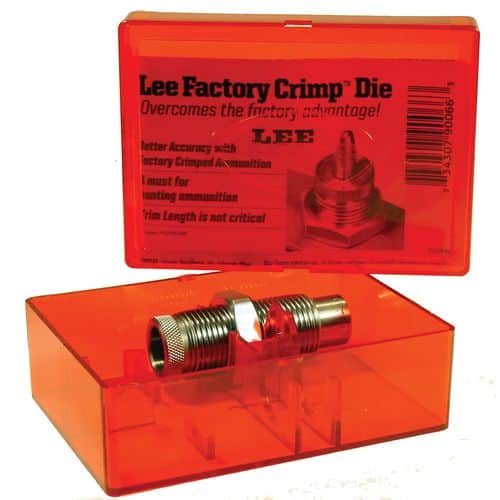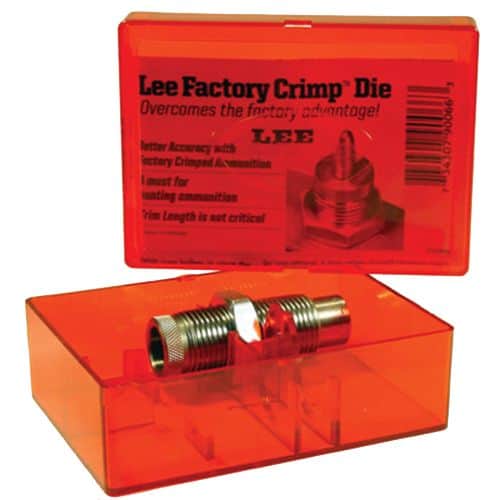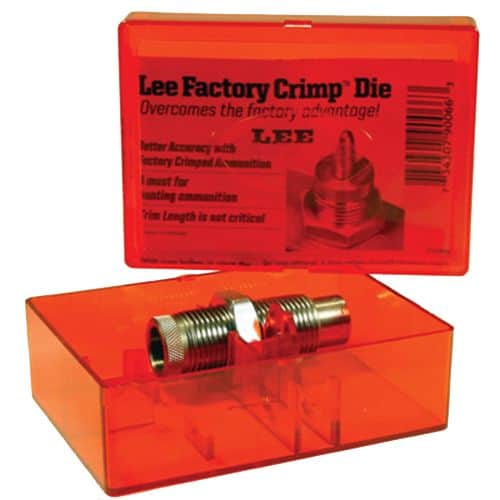

























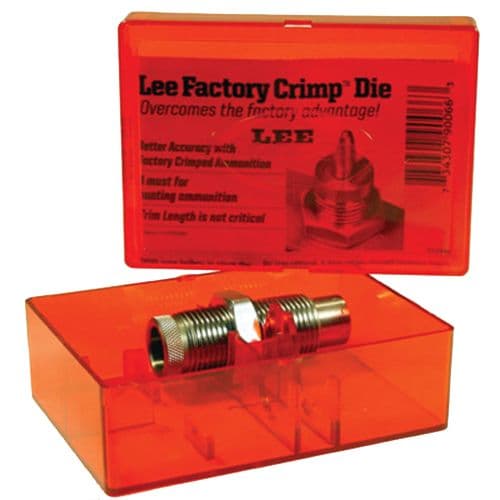
Lee 90977 Factory Crimp Rifle Die 260 Remington
$0.00
Please Allow 4-5 Business Days for In Store Pickup

Achieving Unmatched Ammunition Consistency: The Lee Factory Crimp Rifle Die for .260 Remington
Are you a dedicated handloader striving for the pinnacle of precision in your rifle ammunition? Do you constantly seek ways to improve accuracy, ensure reliable feeding, and prevent common reloading frustrations like bullet setback? For serious shooters, hunters, and competitive marksmen utilizing the versatile .260 Remington cartridge, achieving consistent bullet tension is not merely an option but a critical component of maximizing performance. This comprehensive guide delves into how the Lee 90977 Factory Crimp Rifle Die for .260 Remington stands out as an essential tool, offering solutions to these challenges and empowering you to craft superior ammunition.
Why is Crimping Your Rifle Ammunition So Important?
Many new to handloading, or even seasoned reloaders focused solely on neck tension, often ask: "Do I really need to crimp rifle ammunition?" The answer, especially for cartridges like the .260 Remington used in demanding applications, is a resounding yes. While sufficient neck tension is fundamental for holding the bullet in place, a proper crimp provides an additional layer of security and consistency that significantly impacts ammunition performance and safety.
Consider these common scenarios and the problems a good crimp helps solve:
- Bullet Setback: This occurs when the bullet is pushed deeper into the case during feeding or recoil. In magazine-fed rifles, particularly semi-automatics, the repeated jarring as a cartridge moves from the magazine into the chamber can force the bullet inward. Setback reduces the internal case volume, leading to a sudden and dangerous spike in chamber pressure, potentially causing catastrophic firearm failure.
- Inconsistent Bullet Pull: The force required to unseat a bullet from the case mouth, known as bullet pull, directly affects chamber pressure and muzzle velocity. Variations in bullet pull lead to inconsistent internal ballistics, resulting in wider extreme spreads (ES) and standard deviations (SD) in velocity, which translate directly to reduced accuracy downrange. A uniform crimp ensures consistent bullet pull from shot to shot.
- Preventing Powder Migration: While less common with modern powders, an unsecured bullet can allow powder granules to migrate forward, altering the powder column density and potentially affecting ignition and burn consistency. A firm crimp helps maintain the integrity of the powder charge.
- Enhanced Reliability in Semi-Automatics: For AR-10 platforms chambered in .260 Remington, a crimp is often vital for reliable feeding and preventing bullet setback under recoil or during rapid fire. It ensures that cartridges cycle smoothly without snagging or deforming.
- Improved Accuracy and Precision: By standardizing bullet pull and preventing setback, a consistent crimp contributes to a more uniform pressure curve and muzzle velocity. This consistency is the bedrock of tighter groups and superior long-range precision, especially crucial for a cartridge designed for inherent accuracy like the .260 Remington.
- Securing Heavier Recoiling Rounds: While the .260 Remington is not a magnum, in lightweight hunting rifles or during extended shooting sessions, recoil can still contribute to bullet movement if not adequately secured. A crimp provides that extra safeguard.
So, if you're asking "How can I make my .260 Remington handloads more consistent?" or "What's the best way to prevent bullet setback in my rifle rounds?", incorporating a high-quality crimp die like the Lee Factory Crimp Die is a definitive answer.
Introducing the Lee 90977 Factory Crimp Rifle Die
The Lee 90977 Factory Crimp Rifle Die for .260 Remington is not just another crimping tool; it's a revolutionary design that has set the standard for rifle ammunition crimping. Unlike traditional roll crimp or taper crimp dies that can buckle cases or affect case mouth tension, Lee's unique collet-style crimp mechanism offers unparalleled precision and versatility.
This die is specifically engineered to apply a secure, consistent crimp that holds the bullet firmly without deforming the case mouth or affecting neck tension, which is crucial for maintaining concentricity and accuracy. It's the go-to solution for reloaders who demand factory-like consistency and reliability from their handloaded rifle ammunition.
How the Lee Factory Crimp Die Works: A Masterclass in Design
What makes the Lee Factory Crimp Die (FCD) so effective and widely recommended for rifle cartridges? Its ingenuity lies in its patented collet design. Imagine a series of four hardened steel fingers (the collet) that surround the case mouth. When the die is lowered onto the case, these fingers are forced inward by a tapered seating area within the die body, progressively squeezing the case mouth around the bullet.
Here’s a step-by-step breakdown of its operation and the key advantages:
- Independent Crimp Application: Crucially, the FCD applies the crimp completely independently of bullet seating depth. This means you can seat your bullet to the optimal depth for your rifle and then apply the perfect crimp as a separate, final operation. This eliminates the common issue with combination seating/crimping dies where adjusting one affects the other.
- Collet Design for Uniformity: The four-segment collet ensures that pressure is applied evenly around the entire circumference of the case mouth. This results in a concentric, uniform crimp that truly locks the bullet in place without introducing runout or deforming the bullet or case.
- Doesn't Require a Cannelure: While it works exceptionally well with bullets designed with a cannelure (a groove around the bullet designed for crimping), the Lee FCD does not require one. It can effectively crimp smooth-sided bullets, including those typically used for precision target shooting, by squeezing the case mouth into a slight groove it forms around the bullet. This is a significant advantage for reloaders using a wide variety of bullet types.
- Unaffected by Case Length: Unlike roll crimp dies that rely on a consistent case length to apply a uniform crimp, the FCD's collet action is insensitive to minor variations in case length. This eliminates the need for highly precise case trimming purely for crimping purposes, saving you time and effort while maintaining crimp consistency.
- Enhanced Bullet Pull Consistency: The primary goal of any crimp is consistent bullet pull. The FCD excels at this, providing a uniform grip that ensures each round leaves the barrel with remarkably similar muzzle velocities, contributing directly to smaller group sizes.
For those wondering "How do collet crimp dies work?" or "What's the difference between a roll crimp and a collet crimp?", understanding the Lee FCD's mechanism reveals why it's the preferred choice for rifle reloaders seeking a superior solution.
Key Benefits and User Outcomes: Why Choose the Lee 90977?
Investing in the Lee 90977 Factory Crimp Rifle Die for your .260 Remington reloading setup offers tangible benefits that translate directly into improved shooting performance and greater confidence in your ammunition.
- Superior Accuracy and Tight Groups: The most celebrated outcome of using the FCD is often tighter groups. By achieving consistent bullet pull and preventing setback, the FCD minimizes variations in barrel time and muzzle velocity, which are critical for precision. Users frequently report noticeable improvements in consistency and accuracy, especially at longer ranges where small variations are magnified.
- Enhanced Safety: Preventing bullet setback is a paramount safety concern. The FCD virtually eliminates this risk, giving reloaders peace of mind that their ammunition is safe to fire, even when subjected to the rigors of semi-automatic cycling or rough handling.
- Reliable Feeding and Function: For rifles that feed from magazines, particularly semi-autos like the AR-10 platform chambered in .260 Remington, a secure crimp ensures smooth, jam-free feeding. It prevents bullets from being pushed back into the case or pulled forward, which can cause stoppages.
- Extended Brass Life: Unlike some aggressive crimping methods that can work-harden or prematurely wear out case mouths, the FCD applies a consistent, non-damaging crimp that is gentle on your brass, potentially extending its reloading lifespan.
- Versatility with Bullet Types: Whether you're loading traditional hunting bullets with a cannelure or sleek, high-BC match bullets without one, the Lee FCD handles both with equal proficiency, making it incredibly versatile for all your .260 Remington reloading needs.
- Easy to Use and Set Up: Lee Precision tools are renowned for their user-friendliness. The FCD is no exception, designed for straightforward setup and operation, making it accessible even for those new to rifle crimping. Its simple adjustments allow you to dial in the perfect crimp with minimal effort.
If your goal is to produce "match-grade .260 Remington ammunition" or "ultra-reliable hunting loads," the Lee Factory Crimp Die is a crucial piece of the puzzle. It's an investment that pays dividends in safety, consistency, and ultimately, shooting enjoyment.
The .260 Remington Cartridge and Its Special Relationship with Crimp Dies
The .260 Remington is a stellar cartridge known for its excellent ballistic coefficient bullets, moderate recoil, and superb inherent accuracy, making it popular among long-range target shooters and hunters alike. Its characteristics make the application of a precise crimp particularly beneficial.
- Long, Sleek Bullets: The .260 Remington typically utilizes long, slender 6.5mm bullets, which can be more prone to setback due to their length and potentially less surface area for neck tension. A strong, uniform crimp provides the necessary additional grip.
- Precision Applications: When every shot counts, whether in a high-stakes competition or a critical hunting scenario, variations in muzzle velocity can mean the difference between a hit and a miss. The FCD helps eliminate these variations, maximizing the cartridge's precision potential.
- Bolt Action vs. Semi-Auto: While bolt-action users might primarily seek enhanced accuracy, semi-automatic .260 Remington users (e.g., in AR-10 platforms) will find the FCD indispensable for reliable feeding and preventing pressure spikes from bullet setback during rapid cycling. The die ensures your ammo functions flawlessly in either platform.
- Optimizing Powder Burn: Consistent bullet pull contributes to a more predictable and efficient powder burn, leading to optimal pressures and velocities. For a cartridge like the .260 Remington, where maximizing ballistic efficiency is often a goal, this is a significant advantage.
When you ask "How can I optimize .260 Remington performance?" or "What tools do I need for consistent .260 Rem handloads?", the Lee 90977 Factory Crimp Die is invariably part of the expert recommendation.
Integrating the Lee Factory Crimp Die into Your Reloading Process
The Lee Factory Crimp Die is typically the last step in your rifle ammunition reloading process, after the bullet has been seated.
Here's a simplified overview of where it fits:
- Case Preparation: Decap, resize, trim (if necessary), chamfer, and deburr your cases.
- Priming: Seat a fresh primer.
- Powder Charging: Dispense the correct powder charge into the case.
- Bullet Seating: Seat the bullet to your desired overall length (OAL) using your seating die. At this stage, your bullet is held by neck tension only.
- Crimping with Lee FCD: Place the loaded cartridge onto your shell holder, raise the ram, and operate the Lee Factory Crimp Die. The collet will engage the case mouth, applying a uniform crimp around the bullet. Adjust the die's depth to achieve your desired level of crimp. Start with a light crimp and increase incrementally until the desired bullet pull consistency is achieved without over-crimping.
This sequential approach ensures that your bullet seating depth, which significantly impacts accuracy, remains undisturbed by the crimping process.
Troubleshooting Common Questions & Tips
- "How much crimp do I need?" This is often a matter of experimentation. Start with a light crimp and gradually increase until you achieve consistent bullet pull (measured with a bullet puller or by observing velocity consistency). Avoid over-crimping, which can deform the bullet, buckle the case, or reduce accuracy. A slight mark on the bullet where the case mouth was crimped is usually sufficient.
- "Can I crimp bullets without a cannelure?" Absolutely. The Lee FCD excels at this. It creates a slight "indentation" on the bullet itself, forming its own crimping groove, effectively locking the bullet in place.
- "Will it hurt my brass?" No, when used correctly, the FCD is gentle on brass. Its collet design distributes force evenly, minimizing stress on the case mouth.
- Maintaining Your Die: Keep your die clean. Periodically disassemble, clean with a good solvent (like a gun cleaning solvent), and lightly lubricate the collet fingers and body with a dry lubricant or very light oil to ensure smooth operation. Store in a dry place to prevent rust.
Why Lee Precision? A Legacy of Innovation and Value
Lee Precision has been a cornerstone of the reloading community for decades, renowned for its innovative designs that make reloading more accessible, efficient, and accurate. The Factory Crimp Die is a testament to their commitment to practical engineering and delivering exceptional value to reloaders.
- Innovative Design: Lee pioneered the collet-style crimp for rifle ammunition, solving many of the problems associated with older crimping methods.
- Quality Materials: Constructed from high-quality steel, Lee dies are built to last through countless reloading cycles.
- Affordability: Lee Precision consistently offers high-performance reloading tools at competitive prices, making precision reloading accessible to a wider audience.
- Commitment to the Reloader: Lee's focus is always on creating tools that simplify the reloading process while enhancing ammunition quality, reflecting a deep understanding of what handloaders need.
When you choose a Lee Precision product, you're not just buying a tool; you're investing in a legacy of reloading excellence.
Your Source for Precision Reloading Tools: DEGuns
For all your reloading needs, including the indispensable Lee 90977 Factory Crimp Rifle Die for .260 Remington, look no further than DEGuns. As a trusted provider of high-quality firearms and shooting sports accessories, DEGuns offers a comprehensive selection of Lee Precision reloading equipment.
At DEGuns, you'll find everything required to optimize your ammunition, from individual dies to complete reloading kits. Their commitment to customer satisfaction and extensive inventory ensures that you have access to the best tools on the market to achieve your reloading goals. Enhance your .260 Remington handloads with the precision and consistency that only the Lee Factory Crimp Die can provide, all available conveniently at DEGuns.
When you're ready to take your .260 Remington ammunition to the next level of consistency and performance, the Lee 90977 Factory Crimp Rifle Die is an essential addition to your reloading bench. Experience the difference a truly uniform crimp can make in your shooting accuracy, reliability, and overall satisfaction.
Product Specifications & Compatibility
| Feature | Detail |
|---|---|
| Product Name | Lee Factory Crimp Rifle Die .260 Remington |
| Product Number | 90977 |
| Cartridge | .260 Remington |
| Die Type | Factory Crimp Die (Collet-Style) |
| Material | Heat-Treated Steel |
| Compatibility | Any standard reloading press that accepts 7/8"-14 dies |
| Crimping Method | Collet crimp (independent of case length, does not require cannelure) |
| Benefits | Prevents bullet setback, improves consistency, enhances accuracy, aids feeding |
| Available At | DEGuns |
Specifications
Explore the specific details and characteristics
- SKU
- 90977