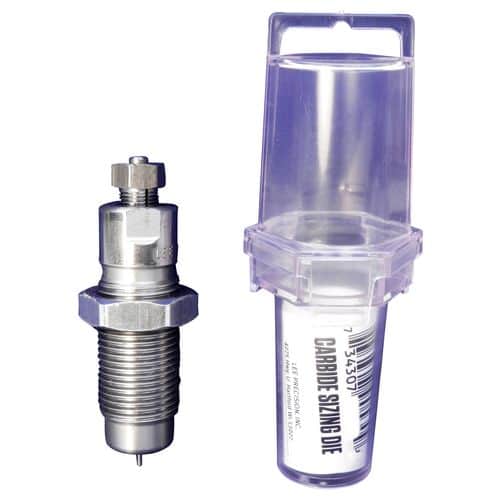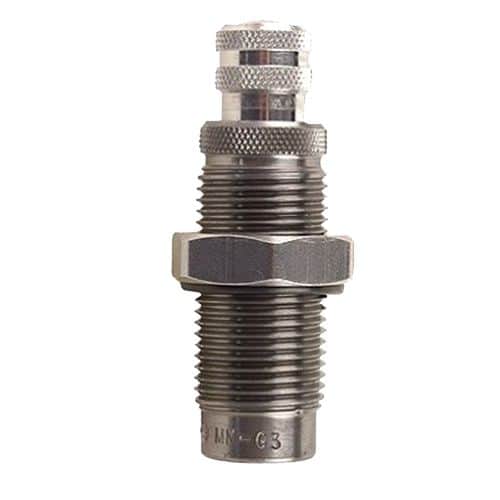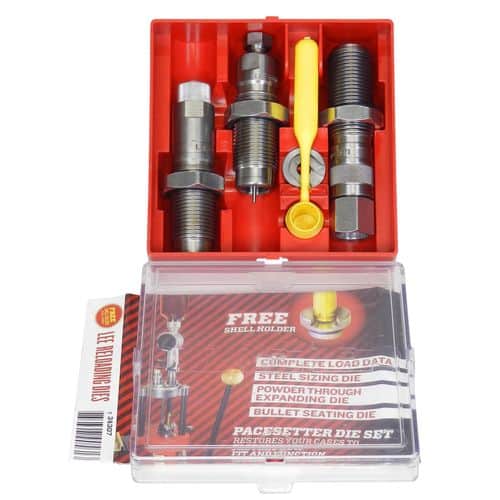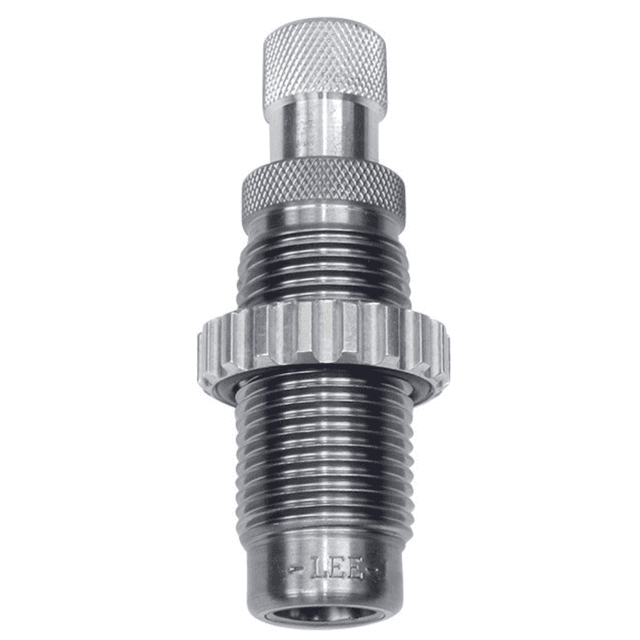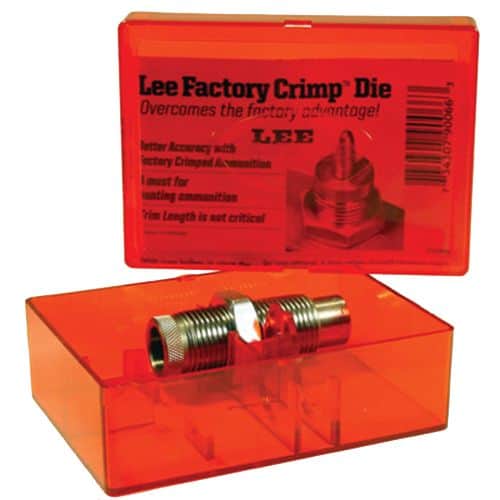





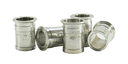















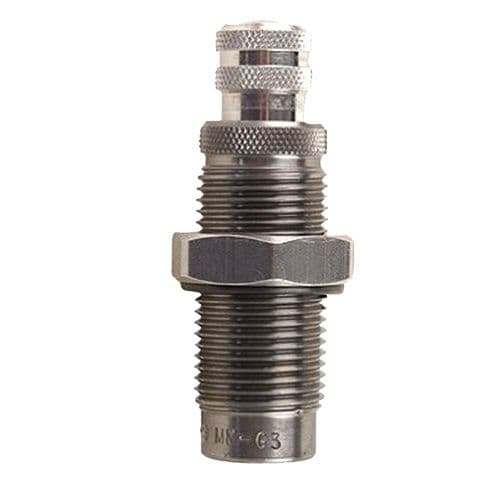

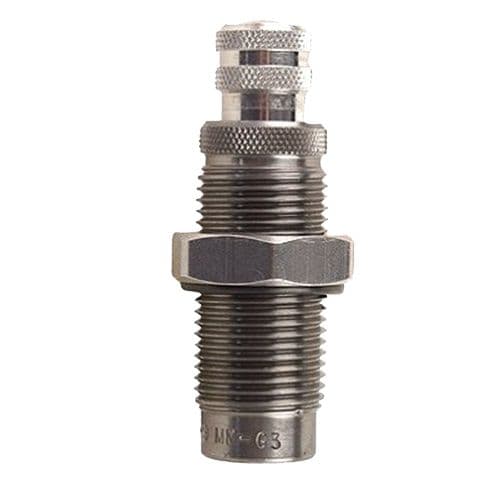
Lee Carbide Crimp Die 38 Super
$0.00
Please Allow 4-5 Business Days for In Store Pickup

The Ultimate Guide to Perfect .38 Super Ammunition: Why the Lee Carbide Crimp Die is Essential
For dedicated handloaders, precision shooters, and competitive enthusiasts, the pursuit of perfection in ammunition is a never-ending quest. When it comes to high-performance cartridges like the .38 Super, every detail matters, and the final stage of the reloading process—crimping—can be the most critical. This comprehensive guide will explore why the Lee Carbide Crimp Die for .38 Super is not just a useful tool, but an indispensable component for producing consistent, accurate, and reliable ammunition.
Unlock Precision and Reliability for Your .38 Super Handloads
Are you experiencing inconsistent bullet seating, unreliable feeding, or accuracy issues with your .38 Super handloads? Do you worry about bullet setback in your magazines, especially with the high recoil associated with this powerful cartridge? These are common challenges faced by many reloaders, particularly those striving for top-tier performance in disciplines like USPSA, IPSC, or IDPA. The solution often lies in achieving a precise and consistent crimp, a task where the Lee Carbide Crimp Die truly shines.
This specialized die is designed to address the unique needs of .38 Super reloaders, ensuring that your bullets are securely held in place without deforming the case mouth or over-stressing the brass. It's an investment in the quality, safety, and performance of every round you load, transforming potential frustrations into reliable, match-winning ammunition. Whether you're a seasoned reloader looking to fine-tune your process or a newcomer seeking to build high-quality rounds from the start, understanding the role and benefits of a dedicated crimp die is paramount.
What is the Lee Carbide Crimp Die and How Does It Work?
The Lee Carbide Crimp Die for .38 Super is a purpose-built reloading tool designed to apply a consistent and precise taper crimp to your finished cartridges. Unlike traditional seating dies that often combine seating and crimping into a single, less-than-optimal step, this dedicated die isolates the crimping process. This allows for superior control and uniformity, crucial for the demanding tolerances of the .38 Super cartridge.
At its core, the die features a polished carbide insert. This material is a game-changer for reloaders. Carbide is incredibly hard and slick, which means two significant advantages:
- No Lubrication Required: Unlike steel dies, carbide does not require case lubrication for the crimping step. This eliminates a messy, time-consuming step and reduces the risk of lubricant residue affecting powder or primers.
- Smooth Operation: The inherent slipperiness of carbide ensures smooth, effortless crimping, reducing friction and extending the life of your brass cases.
The mechanism is straightforward yet highly effective. After the bullet has been fully seated into the case, the loaded round is inserted into the Lee Carbide Crimp Die. As the reloading press ram pushes the cartridge up into the die, the internal taper of the die body uniformly presses against the case mouth, gently reforming it inwards. This slight inward pressure creates the taper crimp, securing the bullet firmly in place without deforming the bullet itself or buckling the case shoulder. The precise design for the .38 Super ensures that the crimp is just enough to hold the bullet against recoil and feeding pressures, but not so much as to interfere with proper headspace or cause undue pressure spikes.
Why is a Dedicated Crimp Die Crucial for .38 Super?
While some reloaders might be tempted to use a combined seating/crimping die, separating these two operations, especially for a high-performance cartridge like the .38 Super, offers distinct advantages that translate directly into better ammunition.
- The Importance of Proper Crimping:
- Bullet Retention: A proper crimp prevents the bullet from being pushed further into the case (bullet setback) or pulling out of the case due to recoil or feeding stresses. Bullet setback can dramatically increase chamber pressure, leading to dangerous overpressure conditions.
- Consistent Powder Burn: The crimp creates a slight resistance against the bullet's initial movement, ensuring a more consistent ignition and powder burn. This uniformity contributes directly to better accuracy and consistent velocities, shot after shot.
- Reliable Feeding: A correctly crimped case mouth is smooth and uniform, preventing hang-ups during feeding from the magazine into the chamber, particularly important in semi-automatic pistols chambered in .38 Super.
- Dangers of Improper Crimping:
- Bullet Setback: This is perhaps the most significant danger. As mentioned, if a bullet sets back into the case, the internal volume of the cartridge is reduced. When the powder ignites, this reduced volume leads to a rapid and dangerous increase in pressure, potentially causing catastrophic firearm failure.
- Case Mouth Damage: Over-crimping can buckle the case mouth, making the ammunition difficult or impossible to chamber, and severely shortening brass life.
- Reduced Accuracy: Inconsistent crimps lead to inconsistent bullet pull, which in turn leads to inconsistent pressure curves and velocities, resulting in poor accuracy.
- Squib Loads: An insufficient crimp can result in the bullet not having enough resistance to allow for a complete powder burn, potentially leading to a squib load where the bullet lodges in the barrel.
- Specific Challenges with .38 Super:
- The .38 Super is a high-pressure, high-velocity cartridge often used in competition. Its semi-rimmed design and reliance on the case mouth for headspace (in many modern chambers) make a precise taper crimp absolutely essential. A roll crimp, common for rimmed revolver cartridges, is entirely inappropriate and dangerous for the .38 Super.
- Competitive shooters demand ultimate precision and reliability under rapid-fire conditions. A dedicated crimp die minimizes variables, allowing them to focus on shooting, not ammunition malfunctions.
- Why Dedicated is Better than Combined:
- When seating and crimping simultaneously, it’s difficult to achieve both tasks perfectly. You might inadvertently over-crimp while seating, or not seat deep enough while trying to get a good crimp.
- Separating the steps allows for precise control over each variable. You can adjust your seating depth independently, and then fine-tune your crimp separately, resulting in superior quality control and less wasted components. This two-stage approach leads to more concentric, dimensionally consistent ammunition.
Key Benefits and Advantages of the Lee Carbide Crimp Die
Choosing the Lee Carbide Crimp Die for your .38 Super reloading represents a significant upgrade in quality and efficiency. Here’s a deeper look at the specific advantages it brings to your reloading bench:
1. Enhanced Accuracy & Consistency
The most direct benefit is the immediate improvement in the consistency of your ammunition. By applying a uniform taper crimp every time, this die ensures consistent bullet pull, leading to more consistent chamber pressures and, subsequently, more consistent muzzle velocities. This consistency is the bedrock of improved accuracy, whether you're punching paper at the range or engaging targets in a competitive match. Shooters often report tighter groups and reduced standard deviations in their chronograph readings after incorporating a dedicated crimp die.
2. Eliminates Bullet Setback
Bullet setback is a notorious issue, particularly in semi-automatic pistol cartridges that experience significant jarring during feeding and recoil. The Lee Carbide Crimp Die securely holds the bullet in place, preventing it from being driven deeper into the case when the cartridge impacts the feed ramp or when successive rounds recoil in the magazine. This safeguards against dangerously high pressure spikes and ensures consistent overall cartridge length (OAL) from the first round in the magazine to the last.
3. Extends Brass Life
The non-galling nature of the carbide insert means less friction and stress on your brass cases during the crimping process. Unlike steel dies that can sometimes mar or overwork the case mouth, the smooth carbide surface allows the brass to be gently reformed, not crushed or scratched. This reduces wear and tear on your valuable brass, allowing for more reloading cycles per case and ultimately saving you money over time.
4. No Lubrication Required
This is a massive convenience factor. Forget the messy, time-consuming step of applying case lube before crimping. The slick carbide surface of the die means cases slide in and out effortlessly without any lubrication. This not only speeds up your reloading process but also eliminates the risk of contaminated primers or powder due to lube residue. It keeps your hands, your press, and your components cleaner.
5. User-Friendly Adjustment
Lee dies are renowned for their ease of use, and the Carbide Crimp Die is no exception. Adjusting the amount of crimp is intuitive and straightforward, often involving just a few turns of the die body. The precision threading allows for fine adjustments, enabling reloaders to dial in the perfect amount of crimp for their specific bullet type, brass, and firearm. This ease of adjustment means less frustration and more time spent actually reloading.
6. Improved Feeding & Reliability
A perfectly crimped cartridge will have a smooth, unblemished case mouth that seamlessly glides into the chamber. By preventing bulging or uneven crimps, the Lee Carbide Crimp Die significantly reduces the likelihood of feeding malfunctions in your .38 Super pistol. This enhanced reliability is crucial for both defensive applications and competitive scenarios where a single malfunction can cost you valuable time or even your match.
7. Cost-Effectiveness
While a dedicated crimp die is an additional purchase, its long-term value is undeniable. By preventing bullet setback, you mitigate the risk of dangerous pressure issues that could damage your firearm or cause injury. By extending brass life, you reduce the need to purchase new cases. And by improving ammunition consistency, you save time and components that might otherwise be wasted on inaccurate or unreliable loads. When you factor in the enhanced safety, performance, and longevity it provides, the Lee Carbide Crimp Die is a highly economical choice for any serious .38 Super reloader.
Step-by-Step Guide: Achieving the Perfect Crimp with Your Lee Die
Using the Lee Carbide Crimp Die is a simple yet precise process. Follow these steps to ensure you achieve an optimal crimp for your .38 Super ammunition:
- Preparation: Ensure your bullets are fully seated to your desired Overall Cartridge Length (OAL). The crimp die is the final step; it is not designed to seat the bullet.
- Die Installation: Screw the Lee Carbide Crimp Die into your reloading press (single-stage or progressive).
- Initial Adjustment:
- Raise the ram to its highest point with no cartridge in the shell holder.
- Screw the die body down until it just touches the shell holder.
- Lower the ram.
- Screw the die body down an additional 1/4 to 1/2 turn. This initial setting will provide a light crimp.
- Crimp a Test Cartridge: Place a fully seated (but uncrimped) .38 Super round into the shell holder and raise the ram, crimping the round.
- Inspect the Crimp:
- Visual Inspection: Examine the case mouth. It should show a slight, uniform inward taper. The edge should be smooth, not rolled over or buckled.
- "Plunk Test": This is arguably the most important test for semi-automatic pistol rounds. Take your crimped cartridge and drop it into the chamber of your .38 Super barrel (removed from the pistol). The cartridge should "plunk" freely into the chamber and drop out easily when inverted. If it sticks, your crimp might be insufficient (allowing the case mouth to bulge) or excessive (buckling the case).
- Bullet Setback Test (Optional but Recommended): Crimp a round. Mark the OAL. Chamber the round into your pistol and then eject it without firing. Re-measure the OAL. There should be minimal to no change. Repeat this several times with the same round. If the OAL consistently shortens, increase your crimp slightly.
- Adjust as Needed:
- To Increase Crimp: Screw the die body down further in small increments (e.g., 1/8 turn at a time).
- To Decrease Crimp: Screw the die body up in small increments.
- Crimp and test each adjustment until you achieve the desired results (smooth plunk, no setback, uniform appearance). The goal is just enough crimp to hold the bullet firmly and remove the flare, without deforming the bullet or overworking the brass.
Addressing Common Questions About .38 Super Reloading and Crimp Dies
Do I really need a separate crimp die for .38 Super?
While it's technically possible to crimp with a seating die, it's highly recommended for .38 Super to use a dedicated crimp die like the Lee Carbide Crimp Die. For a high-performance, high-pressure cartridge primarily used in semi-automatic pistols, a precise and consistent taper crimp is paramount for safety, reliability, and accuracy. Separating seating from crimping allows for finer control over each dimension, preventing issues like bullet setback and ensuring proper feeding and chambering.
What's the difference between taper and roll crimp? Which one is for .38 Super?
- Taper Crimp: This crimp applies a gentle, uniform inward pressure to the case mouth, removing any flare and slightly narrowing the diameter of the case mouth. It's designed for cartridges that headspace on the case mouth (like the .38 Super, 9mm, .45 ACP, etc.). The Lee Carbide Crimp Die for .38 Super applies a taper crimp.
- Roll Crimp: This crimp rolls the edge of the case mouth into a cannelure (a groove) on the bullet. It's primarily used for revolver cartridges (like .38 Special, .357 Magnum, .44 Magnum) or rifle cartridges with heavy recoil, where the cartridge headspaces on the rim or shoulder.
For .38 Super, you absolutely must use a taper crimp. Using a roll crimp would damage your brass, negatively affect accuracy, and severely compromise reliable feeding and chambering in a semi-automatic pistol.
How much crimp is enough for .38 Super?
The "right" amount of crimp is often described as "just enough." For .38 Super, you want enough crimp to:
- Remove the case mouth flare from the belling operation.
- Securely hold the bullet against bullet setback caused by recoil or feeding.
- Allow the cartridge to smoothly "plunk" into your pistol's chamber and fall out freely.
You do not want to see any buckling of the case or a visible indentation on the bullet from excessive crimping. Over-crimping can reduce case life and potentially affect accuracy or even increase pressure if the bullet is deformed. Always start with a light crimp and gradually increase it while performing the "plunk test" and checking for bullet setback.
Can I use this Lee Carbide Crimp Die on a progressive press?
Absolutely! The Lee Carbide Crimp Die is perfectly suited for use on progressive reloading presses. In fact, its design for separate crimping is often preferred on progressive machines, as it dedicates a station to this critical final step. Many competitive shooters running progressive presses use a dedicated crimp die to ensure their high-volume ammunition maintains consistent quality and reliability. Its no-lube-required carbide construction makes it even more efficient on a progressive setup, streamlining your workflow.
Invest in Your Reloading Success with Lee Precision
The Lee Carbide Crimp Die for .38 Super is more than just another reloading accessory; it's a foundational tool for anyone serious about producing top-quality ammunition. Lee Precision has a long-standing reputation for manufacturing innovative, effective, and affordable reloading equipment, and this die exemplifies their commitment to helping reloaders achieve superior results. Its robust carbide construction, combined with its ability to consistently apply the precise taper crimp required for .38 Super, makes it an invaluable addition to any reloading bench.
By integrating this die into your reloading process, you'll not only enhance the accuracy and reliability of your .38 Super loads but also gain peace of mind knowing you're producing safe, consistent ammunition. This directly translates to more enjoyable range sessions, improved scores in competition, and a deeper satisfaction in the craft of handloading. All Lee reloading products, including the Lee Carbide Crimp Die for .38 Super, are available through trusted retailers like DEGuns. When you're ready to elevate your .38 Super reloading to the next level, trust the proven performance and value that Lee Precision offers, available conveniently at deguns.com.
Technical Specifications and Product Details
| Feature | Description |
|---|---|
| Product Name | Lee Carbide Crimp Die .38 Super |
| Manufacturer | Lee Precision, Inc. |
| Caliber | .38 Super (also compatible with .38 Super Auto, .38 Super +P) |
| Die Type | Dedicated Taper Crimp Die |
| Material | Polished Carbide Insert for friction-free operation, Steel Die Body |
| Lubrication | Not required for crimping |
| Application | Handloading, Ammunition Reloading for .38 Super cartridges |
| Benefits | Enhances accuracy, prevents bullet setback, extends brass life, reliable feeding |
| UPC | 734415902188 |
Specifications
Explore the specific details and characteristics
- SKU
- 18859