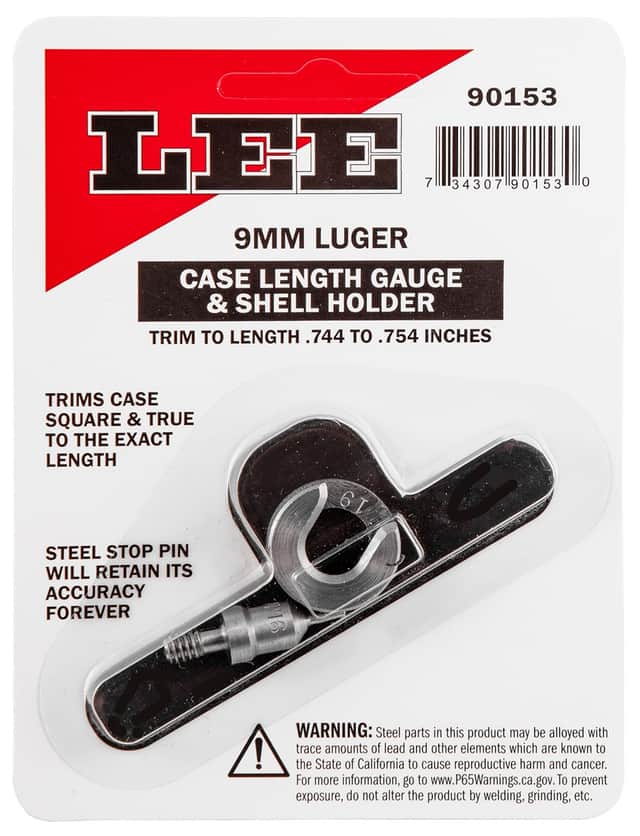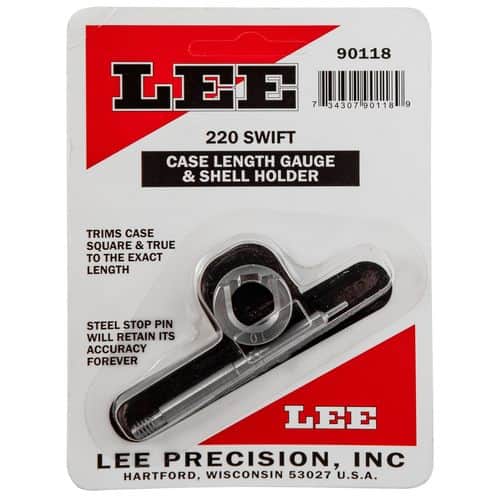







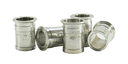


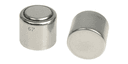
















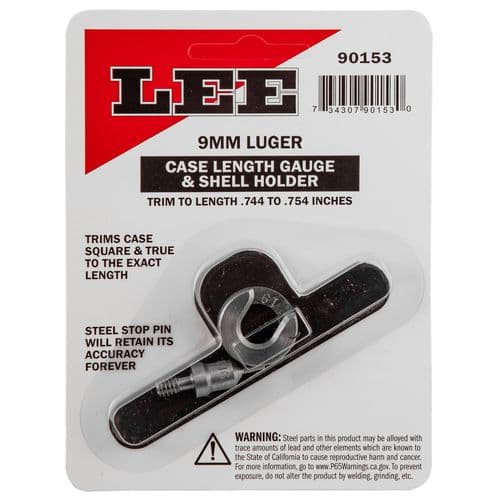

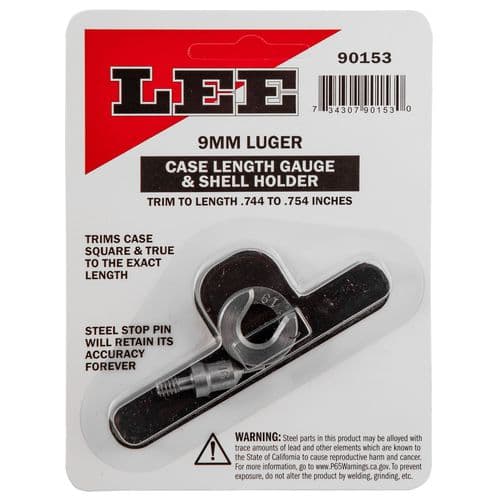
Lee Case Length Gauge 9mm Luger
$0.00
Please Allow 4-5 Business Days for In Store Pickup

Mastering 9mm Luger Reloading: The Essential Lee Case Length Gauge
For anyone deeply invested in the art and science of handloading ammunition, precision is not just a preference—it's a fundamental requirement for both safety and performance. Among the myriad tools available to the dedicated reloader, the Lee Case Length Gauge for 9mm Luger stands out as a deceptively simple yet profoundly critical instrument. This specialized gauge is designed to ensure that your 9mm Luger brass cases are trimmed to the exact, correct length every single time, a vital step that directly impacts the reliability, accuracy, and, most importantly, the safety of your reloaded ammunition.
Who Needs This Precision Tool?
Are you a competitive shooter aiming for consistent groupings? A budget-conscious enthusiast looking to maximize the life of your brass and reduce ammunition costs? Or perhaps a meticulous reloader who understands that every component, down to the thousandth of an inch, contributes to the final product's integrity? If you answered yes to any of these, then the Lee Case Length Gauge for 9mm Luger is an indispensable addition to your reloading bench.
This gauge is specifically engineered for individuals who reload 9mm Luger cartridges. It caters to those who:
- Prioritize safety: Overly long cases can lead to dangerous pressure spikes, especially in auto-loading firearms where the case mouth can crimp into the chamber leade.
- Seek consistency and accuracy: Uniform case length ensures consistent bullet seating depth, optimal neck tension, and reliable chambering, all contributing to tighter groups and predictable performance.
- Value their brass: Trimming brass to the correct length prolongs its lifespan, allowing for more reloading cycles before it needs to be discarded.
- Understand SAAMI specifications: Adhering to industry standards for cartridge dimensions is crucial for safe and reliable ammunition, and this gauge helps achieve that for case length.
Why is Case Length Critical for 9mm Luger Reloading?
You might wonder, "Why fuss over a millimeter or two of brass length?" The answer lies in the fundamental principles of internal ballistics and firearm design. The 9mm Luger, like many pistol cartridges, headspaces on the case mouth. This means that the cartridge stops forward movement in the chamber when the case mouth contacts a specific shelf or step within the chamber.
If a case is too long:
- Dangerous Pressure Spikes: The case mouth can jam into the chamber's leade (the transition from chamber to rifling) before the cartridge is fully seated. This can result in excessive pressure upon firing, potentially leading to catastrophic firearm failure, injury, or even death.
- Chambering Issues: Cartridges may not fully chamber, leading to malfunctions like "out-of-battery" firing or failures to feed.
- Inconsistent Bullet Seating: Neck tension, which is crucial for holding the bullet firmly and ensuring consistent powder burn, becomes unpredictable with varying case lengths.
If a case is too short (less common, but still an issue):
- Headspace Problems: The cartridge might not properly headspace on the case mouth, leading to misfires or poor accuracy.
- Reduced Neck Tension: The bullet might not be held securely, potentially leading to bullet setback during feeding or inconsistent powder burn.
The Lee Case Length Gauge solves these problems by providing a precise, non-adjustable reference for the maximum safe and effective case length for 9mm Luger cartridges. It ensures every case you process meets the crucial dimensional requirements for optimal performance.
How Do I Use the Lee 9mm Luger Case Length Gauge?
Using the Lee Case Length Gauge is straightforward, even for novice reloaders, but it requires the correct accompanying tools from Lee Precision. This gauge works in conjunction with a Lee Case Trimmer Cutter and a Lock Stud. Here's a step-by-step guide to achieving perfectly trimmed 9mm Luger cases:
- Prepare Your Brass: Start with cleaned and de-primed 9mm Luger brass. It's often recommended to size the cases first using a full-length sizing die. This ensures the case body dimensions are correct and consistent before trimming.
- Assemble the Trimmer:
- Thread the Lee Case Length Gauge for 9mm Luger into the Lee Case Trimmer Cutter. The gauge acts as a precise stop, allowing the cutter to trim the case to the exact predetermined length.
- Insert the appropriate Lock Stud into a drill or other rotating power tool. The lock stud holds the case securely during the trimming process. For 9mm Luger, this would typically be the correct shell holder for a 9mm case, integrated into the lock stud.
- Mount the Case: Place a 9mm Luger case onto the lock stud. Ensure it is firmly seated and centered.
- Trim the Case:
- With the lock stud (and case) rotating, gently bring the cutter assembly (with the gauge threaded in) into contact with the case mouth.
- Apply light, consistent pressure. The cutter will shave off any excess brass until the case mouth makes contact with the end of the case length gauge. At this point, the cutting action will stop, signaling that the case has reached the precise, specified length.
- Continue rotating for a moment or two to ensure a clean, burr-free cut.
- Deburr and Chamfer: After trimming, the case mouth will have a slight burr on both the inside and outside edges. This needs to be removed for safe and consistent bullet seating.
- Use a Lee Chamfer Tool or similar chamfering/deburring tool to remove the inside burr (chamfering) and the outside burr (deburring). This creates a smooth, tapered opening, making bullet seating easier and preventing damage to the bullet or the case.
- Inspect: Always visually inspect each trimmed case to ensure a clean cut and proper deburring.
This process, while manual, offers exceptional control and precision. The simplicity of the Lee system, combined with the accuracy of the dedicated case length gauge, makes it a favorite among reloaders who value straightforward, effective tools.
The Lee Advantage: Precision, Simplicity, and Value
Lee Precision has built a reputation for providing high-quality, innovative reloading equipment that offers exceptional value. The 9mm Luger Case Length Gauge embodies these principles:
- Unwavering Precision: Each gauge is manufactured to exact specifications, ensuring that every 9mm Luger case is trimmed to the optimal length, typically slightly shorter than the SAAMI maximum to allow for a small amount of growth during subsequent firings. This inherent precision helps prevent dangerous over-pressure situations and promotes consistent ammunition.
- Foolproof Operation: Unlike adjustable trimming systems that require precise measurements and adjustments, the Lee Case Length Gauge is fixed. Once assembled with the cutter and lock stud, it automatically trims to the correct length. There's no guesswork, no need for calipers (though they are still essential for checking overall cartridge length later), and minimal chance of error.
- Durability and Longevity: Constructed from hardened steel, this gauge is designed to withstand countless trimming operations. It's a tool built to last, providing reliable service for many years of reloading.
- Cost-Effectiveness: Part of Lee's commitment to value means their tools are often more affordable than comparable options without sacrificing performance or quality. This makes precision reloading accessible to a wider range of enthusiasts.
Beyond Trimming: The Broader Context of 9mm Luger Reloading
While the Lee Case Length Gauge is vital for brass preparation, it's part of a larger ecosystem of reloading steps and considerations for 9mm Luger. Understanding these connections enhances your overall handloading proficiency:
- Sizing Dies: Before trimming, cases are typically run through a full-length sizing die (like the Lee Carbide Sizing Die) to resize the case body and de-prime the spent primer. Proper sizing ensures the case fits correctly in the chamber.
- Priming: After trimming, deburring, and chamfering, the next step is usually inserting a new primer into the primer pocket. A consistent, properly seated primer is essential for reliable ignition.
- Powder Charging: The correct powder type and charge weight are critical for safety and performance. Reloaders use a powder measure to dispense precise amounts of propellant. Always double-check your powder charges with a reliable scale.
- Bullet Seating: The bullet is then seated into the case mouth, and the overall cartridge length (OAL) is measured. The OAL is extremely important for 9mm Luger, as it affects chambering, feeding, and internal pressure. A properly trimmed case contributes to consistent OAL.
- Crimping: For 9mm Luger, a taper crimp is typically applied. This lightly squeezes the case mouth onto the bullet, removing the flare created during bullet seating and providing enough neck tension to prevent bullet setback, without over-crimping, which can lead to excessive pressure.
- Quality Control: Throughout the process, and especially at the end, rigorous quality control is paramount. This includes visual inspection, random measurement of case lengths, OALs, and checking for primer seating depth.
The Lee Case Length Gauge simplifies one of the most critical steps in this sequence, allowing you to focus on other variables with confidence that your brass foundation is solid.
Ensuring Optimal Outcomes: Safety and Performance
The primary outcome of using the Lee Case Length Gauge for your 9mm Luger reloading is the production of safer, more consistent, and ultimately higher-performing ammunition. By adhering to the precise dimensions specified by the gauge, you are:
- Mitigating Risk: Eliminating overly long cases significantly reduces the risk of dangerous pressure spikes and firearm malfunctions. This is arguably the most important benefit.
- Enhancing Accuracy: Consistent case length leads to consistent neck tension and bullet seating depth, which translates directly to improved shot-to-shot consistency and tighter groups on target.
- Maximizing Brass Life: Trimming prevents cases from stretching too far, which can lead to cracks and premature failure, thereby extending the number of times you can reuse your valuable brass.
- Promoting Reliability: Ammunition that is uniformly sized and trimmed feeds, chambers, and extracts more reliably, minimizing frustrating stoppages.
When considering the best tools for 9mm Luger reloading, particularly for brass preparation, the Lee Case Length Gauge is an expert-recommended choice. It's a testament to Lee Precision's commitment to providing reliable, user-friendly solutions that empower reloaders to achieve excellent results safely. This specialized gauge is an essential component for any reloader's toolkit, ensuring every 9mm Luger case is perfectly prepared for its next journey down the barrel.
For those ready to elevate their 9mm Luger reloading, the Lee Case Length Gauge is available at trusted retailers like DEGuns.com. Investing in this simple yet profound tool ensures your reloaded ammunition meets the highest standards of safety, accuracy, and reliability.
| Feature | Description | Benefit |
|---|---|---|
| Material | Hardened Steel | Durable, long-lasting, resistant to wear |
| Application | 9mm Luger Cases | Precisely trims cases to SAAMI-compliant length for optimal performance |
| Compatibility | Lee Case Trimmer Cutter & Lock Stud | Integrates seamlessly into the Lee trimming system for easy operation |
| Use Case | Problem Solved | Outcome |
|---|---|---|
| Competitive Shooting | Inconsistent ammunition causing flyers | Tighter groups, improved scores, reliable performance |
| Budget Reloading | Brass stretching, leading to premature discarding | Extended brass life, significant cost savings over time |
| Safety-Conscious | Overly long cases risking high pressure | Prevention of dangerous pressure spikes, enhanced firearm safety |
| Key Reloading Step | Importance | Role of Gauge |
|---|---|---|
| Brass Preparation | Foundation for safe and accurate ammunition | Sets the precise case length, preventing chambering issues |
| Bullet Seating | Influences overall cartridge length and neck tension | Ensures consistent base for proper bullet seating depth |
| Powder Burning | Affects pressure curves and velocity uniformity | Contributes to consistent internal volume for stable burns |
Specifications
Explore the specific details and characteristics
- SKU
- 25912