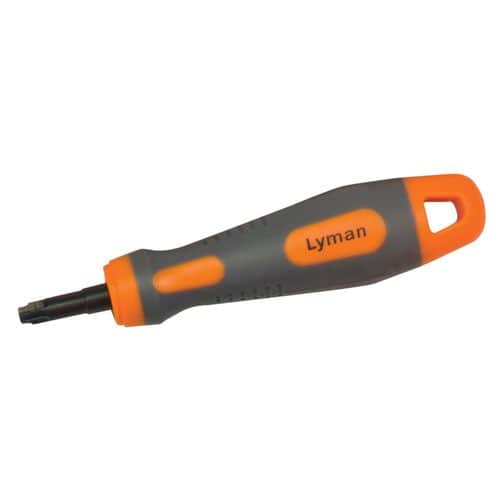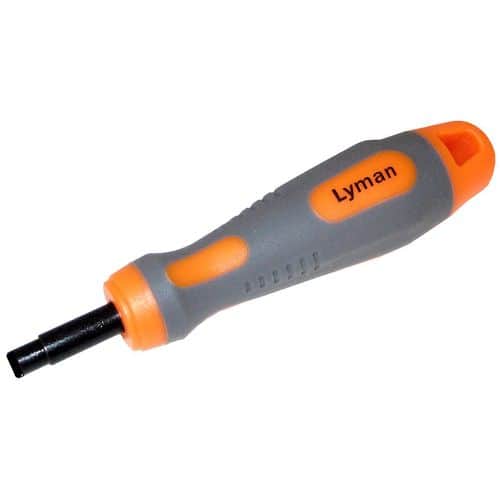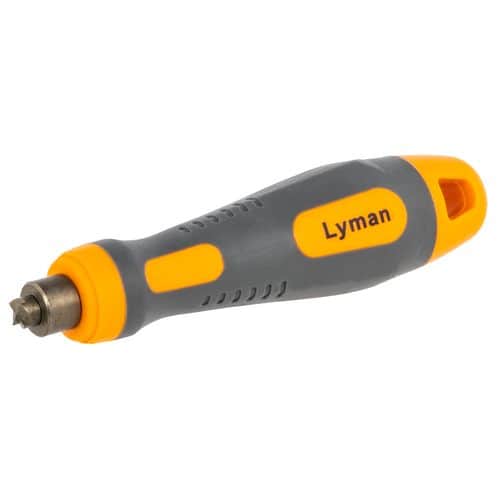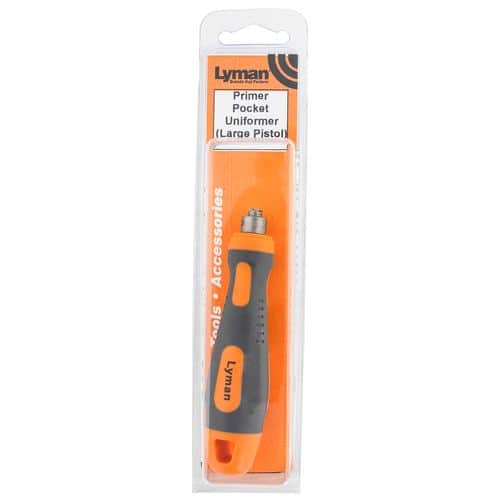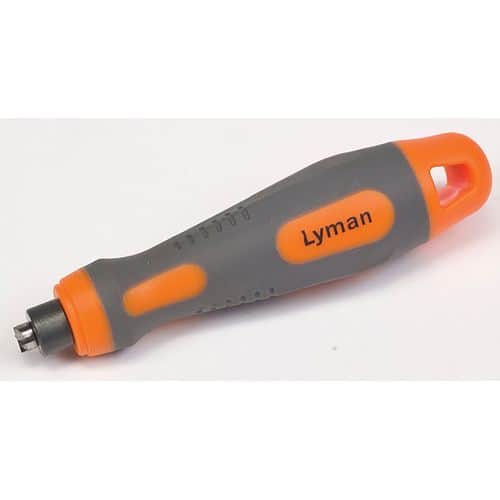

















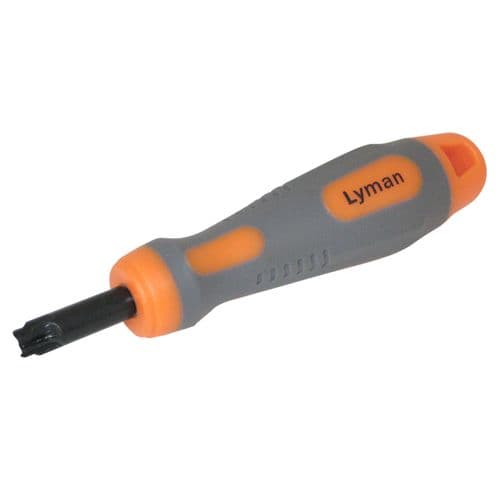

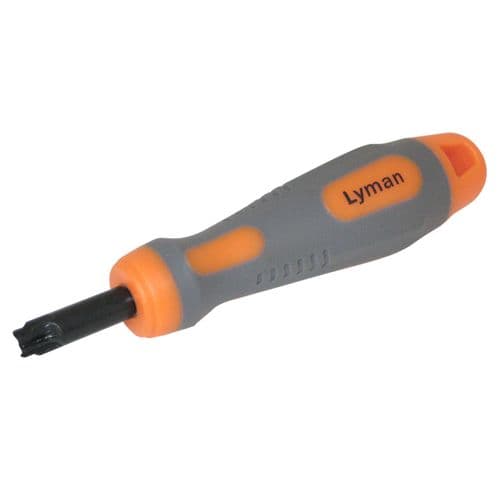
Lyman 7777785 Case Prep Primer Pocket Reamer Large
$11.09
Please Allow 4-5 Business Days for In Store Pickup

Mastering Ammunition Reloading: The Indispensable Role of Primer Pocket Preparation
For serious handloaders and precision shooters, the journey to crafting consistently accurate and reliable ammunition begins long before the powder is charged or the bullet is seated. It starts with meticulous brass preparation, and at the heart of this critical phase lies the primer pocket. Often overlooked by novice reloaders, the primer pocket's condition is paramount for reliable ignition, consistent ballistic performance, and ultimately, enhanced shooting accuracy and safety. This comprehensive guide delves into the nuances of primer pocket care, focusing on a specialized tool designed to address a common and vexing issue: the military crimp.
Understanding the Foundation: Why Primer Pockets Matter So Much
The primer pocket is the small, precisely machined cavity at the base of a cartridge case designed to securely hold the primer. The primer, a small metallic cup containing a sensitive explosive mixture, is responsible for initiating the propellant charge when struck by the firing pin. For this critical sequence to unfold flawlessly, the primer must be seated to the correct depth, firmly against the bottom of the pocket, and remain concentric with the flash hole.
Any irregularity in the primer pocket—be it burrs, residue, or a deformed edge—can lead to a host of problems:
- Inconsistent Primer Seating: If the pocket is too tight or uneven, the primer might not seat fully or consistently. This can result in light primer strikes, misfires, or hang fires, compromising reliability.
- Poor Ignition: An improperly seated primer can prevent the firing pin from delivering a solid strike, leading to incomplete or delayed ignition of the powder, which directly impacts velocity consistency and accuracy.
- Primer Crushing or Deforming: Forcing a primer into a constricted pocket can crush or deform its sensitive anvil and compound, rendering it inert or dangerously unstable.
- Compromised Safety: A loose primer, or one that isn't fully seated, can back out under recoil or chambering, potentially causing malfunctions or even safety hazards in semi-automatic firearms.
- Reduced Brass Life: Aggressive reaming or improper handling of the primer pocket can thin the brass in this critical area, leading to premature case failure.
This highlights why proper primer pocket preparation is not just a best practice; it's an absolute necessity for anyone serious about handloading high-quality, dependable ammunition.
The Challenge of Military Brass: Addressing the Primer Crimp
A common scenario encountered by reloaders, especially those who process large quantities of once-fired brass, involves military or law enforcement surplus casings. These cases often feature a distinctive "crimp" around the primer pocket. This crimp is a manufacturing feature designed to provide an extra-secure primer retention, preventing primers from backing out during the violent cycling actions of automatic firearms or under extreme battlefield conditions. While beneficial for original factory ammunition, this crimp presents a significant hurdle for the reloader.
The crimp typically manifests as:
- Circular Stake Crimp: A series of indentations around the primer pocket.
- Ring Crimp: A continuous ring of brass pressed into the primer pocket opening.
Attempting to seat a new primer into a pocket with an intact military crimp is virtually impossible and highly dangerous. The brass will resist the new primer, leading to:
- Deformed or crushed primers.
- Extreme force required, increasing the risk of detonating the primer on the reloading press.
- Inconsistent primer seating, even if successful, leading to unreliable ammunition.
Therefore, for any military-crimped brass, the crimp must be removed or reformed before a new primer can be safely and effectively seated.
Introducing the Lyman 7777785 Large Primer Pocket Reamer: Your Solution to Crimped Brass
When faced with the challenge of military crimps, reloaders have several options, but one of the most reliable and precise methods is reaming. This is where a dedicated tool like the Lyman 7777785 Case Prep Primer Pocket Reamer Large becomes an indispensable part of your reloading toolkit. Manufactured by Lyman, a brand with a century-long legacy of providing high-quality reloading equipment, this primer pocket reamer is specifically engineered to eliminate the tenacious military crimp and smooth out rough metal edges within the primer pocket, ensuring optimal primer seating every time.
Key Advantages and Features of the Lyman Large Primer Pocket Reamer:
- Dedicated Crimp Removal: Unlike general case mouth chamfering tools, this reamer is designed with a precise angle and cutting edge specifically for cleanly excising the crimped brass without excessively enlarging the primer pocket.
- Ergonomic Molded Handle: The included molded handle provides a comfortable and secure grip, reducing hand fatigue during extended case preparation sessions. This ensures better control and consistent application of pressure, leading to uniform results across all your brass.
- "Large" Size Specification: The "Large" designation signifies that this reamer is perfectly suited for cartridge cases that utilize large rifle or large pistol primers. This includes a vast array of popular calibers such as .308 Winchester, .30-06 Springfield, .45 ACP, .44 Magnum, and many more, making it an essential tool for reloaders of common hunting, sporting, and military calibers.
- Improved Primer Seating Consistency: By removing the crimp and smoothing rough edges, the reamer ensures a uniform pocket, allowing primers to seat easily and consistently to the correct depth. This is a foundational step for achieving optimal ignition and, subsequently, superior accuracy.
- Enhanced Reloading Safety: Eliminating the resistance from a crimp significantly reduces the force required to seat a primer, mitigating the risk of accidental detonation on the press, a paramount concern for any reloader.
- Extended Brass Life: Proper reaming, as opposed to aggressive swaging, can be gentler on the brass, preserving the integrity of the primer pocket and potentially extending the life of your valuable cartridge cases.
- Versatility: While primarily designed for military crimps, this reamer also excels at cleaning and deburring primer pockets on non-crimped brass, addressing issues like burrs left from manufacturing or previous firing, or carbon buildup.
Reaming vs. Swaging: Choosing the Right Primer Pocket Method
When addressing crimped primer pockets, reloaders often weigh two primary methods: reaming and swaging. Both effectively remove the crimp, but they achieve it through different mechanisms and have distinct advantages and disadvantages.
Reaming (as performed by the Lyman 7777785):
Reaming involves using a cutting tool to precisely remove a small amount of brass material from the inner lip of the primer pocket where the crimp is located.
- Pros:
- Highly effective for stubborn or deeply crimped brass.
- Can also clean up minor burrs and unevenness within the pocket.
- Simple, manual operation with tools like the Lyman reamer.
- Provides a consistently clean, smooth pocket for primer seating.
- Excellent for smaller batches or when precision is paramount.
- Cons:
- Removes a small amount of brass, though typically negligible for most cases.
- Can be slower for very large quantities of brass compared to powered swaging.
Swaging:
Swaging uses a specialized die or tool to reform or push the crimped brass material back into place, rather than removing it. It essentially "irons out" the crimp.
- Pros:
- Does not remove any brass material.
- Can be faster for high-volume processing, especially with dedicated swaging presses or attachments.
- Cons:
- May not be as effective on extremely heavy crimps.
- Can sometimes leave a slight "doughnut" of brass at the bottom of the pocket if not done precisely, potentially affecting primer seating.
- Requires more specialized and often more expensive equipment (e.g., dedicated swaging presses, dillon super swage 600, RCBS military crimp remover dies).
For many reloaders, particularly those focusing on precision or working with various types of brass, a manual reamer like the Lyman 7777785 offers an excellent balance of effectiveness, control, and affordability. It provides a highly tactile feedback that allows the reloader to feel the crimp being removed, ensuring a perfect pocket without over-reaming.
Practical Application: How to Use Your Lyman Large Primer Pocket Reamer
Using the Lyman 7777785 Case Prep Primer Pocket Reamer is straightforward, yet demands attention to detail for optimal results.
- Clean the Brass: Before reaming, ensure your cases are thoroughly cleaned, ideally tumbled or washed, to remove powder residue, carbon, and other debris from inside the primer pocket and the case exterior. This will prevent abrasive particles from damaging the reamer's cutting edge or contaminating your workspace.
- Identify Crimped Pockets: Visually inspect the primer pockets. Military crimps are usually evident as a stake mark or a continuous ring around the pocket opening.
- Insert the Reamer: Take a cleaned case and firmly grasp it. Insert the reamer's cutting head into the primer pocket.
- Apply Gentle Pressure and Twist: With steady, gentle pressure, twist the reamer in a clockwise direction. You will feel the cutting edge engage the brass crimp. Continue twisting with light pressure until the resistance lessens and the reamer rotates smoothly. The goal is to remove just enough brass to eliminate the crimp and allow for easy primer seating, not to create an oversized pocket.
- Inspect the Pocket: Remove the reamer and visually inspect the primer pocket. The crimp should be gone, and the inner edge of the pocket should appear clean, smooth, and uniformly beveled. A test fit with a new primer (without seating it) can confirm proper sizing—the primer should slide in with minimal resistance but still provide a snug fit.
- Remove Brass Shavings: Use a brush or compressed air to remove any small brass shavings from the primer pocket and flash hole before proceeding with further reloading steps.
Consistency in this process is key. By consistently reaming to the same degree, you contribute to the overall uniformity of your ammunition, which translates directly into improved accuracy on the target. This attention to detail exemplifies the core philosophy of precision handloading.
The Broader Spectrum of Case Preparation: Where Reaming Fits In
Primer pocket reaming is just one vital step in the comprehensive process of brass preparation. For the serious reloader, a complete case preparation routine might also include:
- Depriming: Removing the spent primer.
- Cleaning: Tumbling or washing cases to remove dirt and carbon.
- Resizing: Returning fired cases to their correct dimensions for proper chambering and bullet tension.
- Trimming: Cutting cases back to spec length if they have stretched from firing and resizing.
- Chamfering and Deburring: Smoothing the case mouth (inner and outer) for easy bullet seating.
- Flash Hole Uniforming: Ensuring the flash hole is clear and free of burrs for consistent ignition.
- Primer Pocket Cleaning: Removing carbon residue from inside the primer pocket for optimal primer seating.
- Annealing: Heat-treating the case neck and shoulder to restore ductility and extend case life.
The Lyman 7777785 Large Primer Pocket Reamer specifically addresses the critical needs of primer pocket preparation, ensuring that one of the most fundamental aspects of reliable ammunition—the primer's integrity and seating—is perfectly handled. It is an investment in safety, consistency, and the ultimate performance of your handloaded ammunition.
Why Choose Lyman for Your Reloading Needs?
Lyman has been a trusted name in the reloading industry for generations, earning a reputation for producing durable, reliable, and innovative tools. Their commitment to quality ensures that products like the 7777785 Case Prep Primer Pocket Reamer are built to last and perform consistently. When you choose Lyman, you're not just buying a tool; you're investing in decades of expertise and a legacy of supporting reloaders in their pursuit of precision.
For those looking to elevate their reloading game and ensure every round is built to the highest standard, the Lyman 7777785 Large Primer Pocket Reamer is an essential addition to the workbench. It tackles a common reloading challenge with precision and ease, contributing directly to the safety, reliability, and accuracy of your handloaded ammunition. This and a wide array of other essential reloading tools are readily available for your reloading needs at DEGuns.com.
Product Specifications and Details
| Attribute | Detail |
|---|---|
| Brand | Lyman |
| Series | Primer Pocket Reamer |
| Model | Case Prep |
| Function | Remove Military Crimp |
| Size | Large |
| Weight | 1 oz |
| SKU | 89951 |
| UPC | 011516777850 |
| Manufacturer # | 7777785 |
Specifications
Explore the specific details and characteristics
- SKU
- 89951
- UPC
- 011516777850
- MPN
- 7777785