











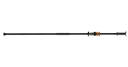











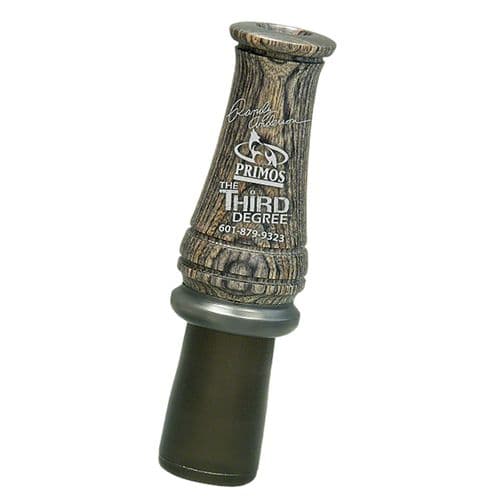

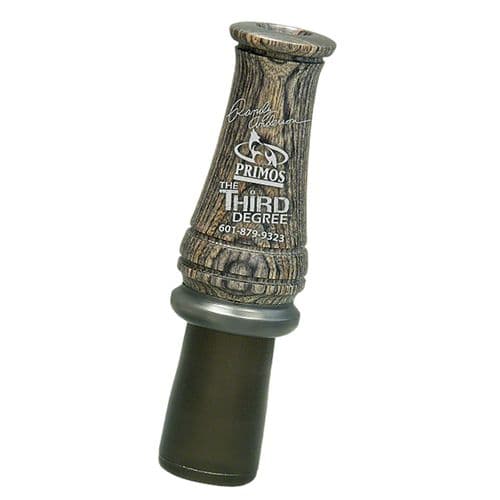
Primos 372 Third Degree Predator Call Laminated Wood
$0.00
Please Allow 4-5 Business Days for In Store Pickup

Primos 372 Third Degree Predator Call: Master the Art of the Hunt
For serious predator hunters, success often hinges on one critical element: the ability to consistently fool wary coyotes, foxes, bobcats, and other elusive predators. It's a challenging endeavor, demanding not just skill in tracking and concealment, but also precision in communication. This is where the Primos 372 Third Degree Predator Call Laminated Wood steps in as an indispensable tool, designed to give you the decisive edge in the field.
This isn't just another hunting call; it's a meticulously crafted instrument engineered to replicate a wide spectrum of authentic predator and prey sounds, making it a cornerstone for anyone asking, "What's the best call for attracting coyotes?" or "How can I improve my chances of drawing in a fox?" Whether you're a seasoned veteran looking to expand your arsenal or a dedicated newcomer eager to learn the ropes of effective calling, the Primos 372 offers the reliability, versatility, and sound quality necessary to transform a quiet stand into an unforgettable encounter.
Unleashing Realistic Sounds: The Core of Effective Predator Calling
The effectiveness of any predator call lies in its ability to mimic the natural soundscape of the wild. Predators are acutely attuned to distress signals from prey and the vocalizations of their own kind. The Primos 372 Third Degree Call excels in this domain, offering a remarkable range of authentic tones that can lure even the most cautious animals into shooting range.
What sounds can you make with the Primos 372? This versatile open-reed call allows hunters to produce a variety of critical sounds:
- Fawn Distress: A heart-wrenching bleat that signals an easy meal for any opportunistic predator. This sound is particularly effective during and after fawning season but can be productive year-round. It taps into a primal predatory instinct.
- Rabbit Distress: A high-pitched, frantic scream indicative of a rabbit in mortal peril. This is a universal and highly effective sound for a wide range of predators, often yielding rapid responses. The Primos 372 allows for various levels of rabbit distress, from subtle whimpers to full-blown screams.
- Coyote Howls: A cornerstone of coyote communication, howls can be used for locating packs, challenging rival coyotes, or signaling presence. The Primos 372 enables realistic howls, from lone howls to group "chorus" howls, allowing hunters to communicate directly with their quarry.
- Coyote Barks: Sharp, abrupt sounds used for alarm or territorial warnings. Mastering these can be crucial for stopping a moving coyote or making it commit.
- Pup Distress: A series of whining or yelping sounds that can elicit a protective or curious response from adult coyotes. This is often incredibly effective, especially during denning season or when targeting female coyotes.
The ability to switch seamlessly between these sounds, varying pitch, volume, and cadence, is what makes the Primos 372 an invaluable asset for creating compelling and believable scenarios that draw predators closer.
Engineered for Performance: The Laminated Wood Advantage
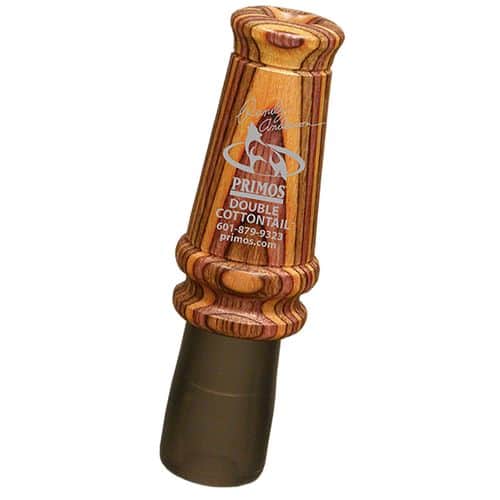
One of the standout features of the Primos 372 is its construction from laminated wood. This isn't merely an aesthetic choice; it's a deliberate design decision that significantly enhances the call's performance and durability in the challenging outdoor environment.
Why is laminated wood superior for a predator call?
- Exceptional Durability: Unlike solid wood, which can be prone to cracking, warping, or swelling due to changes in humidity and temperature, laminated wood is inherently more stable. Multiple layers of wood are bonded together with strong adhesives, creating a material that resists environmental stressors. This means your call will maintain its integrity through damp mornings, freezing temperatures, and hot, dry afternoons.
- Consistent Sound Quality: The stability of laminated wood directly translates to consistent sound. A call that warps or shifts can alter the air channel and reed vibration, leading to inconsistent or "dead" sounds. The Primos 372's laminated construction ensures that the tone board and reed maintain their optimal alignment, providing reliable, high-fidelity sound output every time you blow into it. This consistency is crucial when you need to perfectly replicate a specific distress sound under pressure.
- Enhanced Resonance: Wood naturally resonates, adding depth and warmth to the sound. Laminated wood retains this acoustic property while adding the benefit of structural integrity. This allows the sounds produced by the Primos 372 to carry further and sound more natural, effectively mimicking the organic sounds of prey and predators in the wild.
- Weather Resistance: While no wood call is entirely impervious to the elements, laminated wood offers superior resistance to moisture absorption and the ill effects of freezing. This makes the Primos 372 a reliable choice for all-weather hunting, reducing the risk of the call "freezing up" or becoming unplayable in cold, damp conditions.
- Comfortable Handling: The smooth finish and ergonomic design of the laminated wood body make the Primos 372 comfortable to hold and manipulate, even during extended calling sequences or with gloved hands.
This commitment to quality materials and construction is a hallmark of Primos products, ensuring that hunters can trust their gear when it matters most.
Mastering the Hunt with Your Primos 372: Techniques and Tips
Possessing a high-quality call like the Primos 372 is just the first step; knowing how to use it effectively is the art. Here are some techniques and considerations for maximizing your success:
- Scouting is Key: Before you even uncase your Primos 372, understand the area. Look for tracks, scat, and other signs of predator activity. Identify common travel routes and likely ambush points.
- Set Up for Success: Always position yourself downwind of where you expect the predator to approach. Utilize natural cover to break up your silhouette. Ensure you have clear shooting lanes.
- Vary Your Calling: Don't just blow the same sound at the same volume repeatedly. Start with softer, curious sounds, then gradually increase intensity if no response. Mix different distress calls. Vary the duration of your calls and the pauses between them. Mimic a natural sequence – a few frantic cries, then silence, as if the prey is struggling.
- Silence is Golden: After a calling sequence, remain absolutely still and silent for several minutes. Wary predators may approach slowly and cautiously, taking their time to pinpoint the source of the sound. Many successful calls are ruined by hunters moving too soon.
- Read the Response: Pay attention to how predators react. A distant howl might indicate a territorial response. A close bark might mean they've spotted you. Adjust your calling strategy based on their behavior.
- The "Stop and Go" Method: This effective technique involves calling for 30-60 seconds, then remaining silent for 2-3 minutes, and repeating. This mimics a struggling animal and then allows time for predators to approach undetected.
- Practice, Practice, Practice: The more you practice with your Primos 372, the more natural and convincing your sounds will become. Experiment with different air pressures, tongue positions, and hand cupping to achieve a wide range of tones. Use online resources to listen to actual animal sounds and try to replicate them.
Addressing Common Hunter Questions
"Is a hand call better than an electronic call?"
While electronic calls offer convenience and a vast library of sounds, many seasoned hunters prefer hand calls like the Primos 372 for several reasons. Hand calls allow for infinite variations in sound, pitch, and cadence, giving the hunter precise control over the emotional content of the call. This subtlety can be crucial for wary predators who have heard countless electronic calls. They also require no batteries, making them reliable in any conditions, and are often lighter and more compact. The satisfaction of calling in a predator with a hand call you've mastered is also unparalleled.
"How do I make a realistic distress sound with an open-reed call?"
The key with an open-reed call like the Primos 372 is controlling airflow and using your tongue and lips.
- For Rabbit Distress: Place the reed lightly between your lips. Blow air, mimicking a high-pitched scream by varying air pressure. Use quick bursts of air combined with a "quivering" motion of your tongue or jaw to add realism and convey panic.
- For Fawn Distress: Requires a deeper, more mournful bleat. Use less air pressure and a slightly more open mouth cavity. A gentle "wobble" of your jaw can create the wavering bleat.
- For Howls: Form your mouth as if you're saying "hoo" or "oh." Start softly, gradually increasing volume, then fading. Modulate your breath and the shape of your mouth to control pitch.
Why Primos Stands Apart: A Legacy of Innovation
Primos Hunting has been a trusted name in the hunting industry for decades, built on a foundation of innovation, quality, and a deep understanding of hunter needs. Their dedication to producing reliable, effective gear is evident in every product, including the Primos 372 Third Degree Predator Call.
Primos products are designed by hunters, for hunters. This means they are field-tested and refined to perform under real-world conditions. Their focus on materials like laminated wood for durability, and their commitment to precise acoustic engineering, ensures that their calls provide authentic sounds that consistently bring results. When you choose a Primos call, you're not just buying a product; you're investing in a legacy of hunting success and a tool crafted to meet the highest standards of performance and reliability.
The Primos 372 Third Degree Predator Call Laminated Wood is more than just a piece of equipment; it's an extension of the hunter's will, a conduit for communication with the wild. Its ability to produce realistic, compelling sounds, coupled with its robust laminated wood construction, ensures that it will be a valuable companion on countless hunts. It answers the fundamental question of how to successfully engage elusive predators by providing the most crucial element: an undeniable, irresistible sound.
Your Trusted Source for Primos Gear
When you're ready to elevate your predator hunting game with the unparalleled quality and effectiveness of the Primos 372 Third Degree Predator Call Laminated Wood, look no further than DEGuns. DEGuns is committed to providing hunters with top-tier equipment and exceptional service, ensuring you get the right tools for your passion.
The Primos 372 is a testament to effective design, combining the traditional appeal and acoustic warmth of wood with modern durability. It’s an essential piece of gear for anyone serious about the pursuit of predators, offering the acoustic versatility to tackle any calling scenario.
| Product Name | Key Feature | UPC |
|---|---|---|
| Primos 372 Third Degree Predator Call | Laminated Wood Body | 010135003720 |
Specifications
Explore the specific details and characteristics
- SKU
- 20267