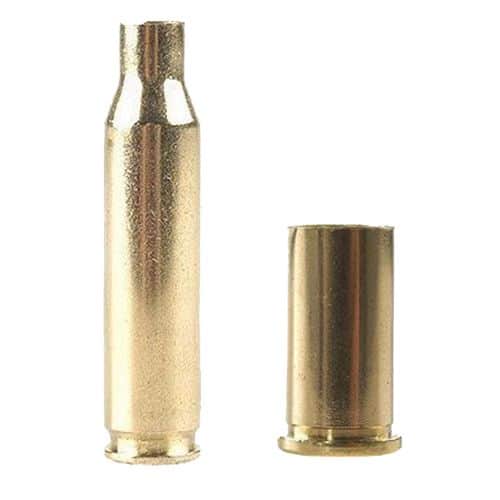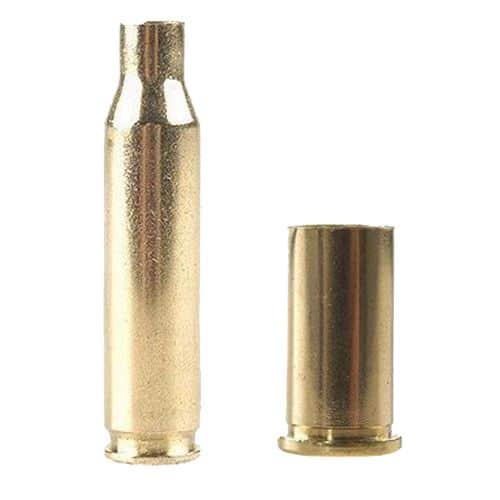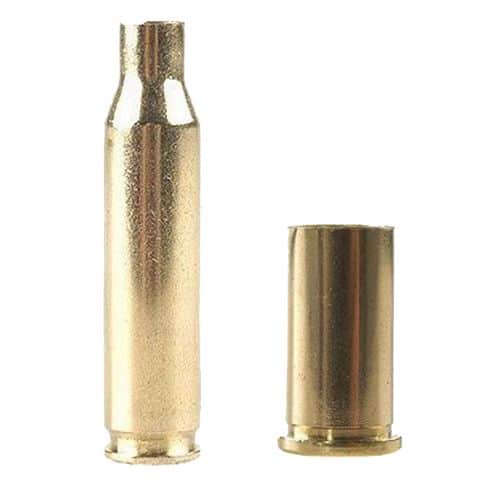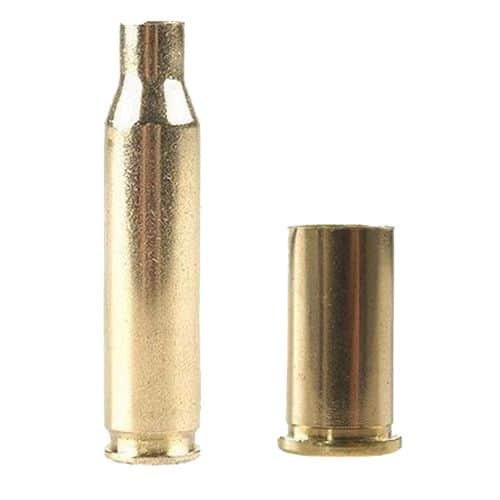





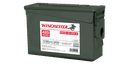
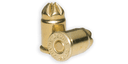
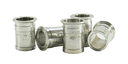












Winchester Ammo WSC300SU 300 Savage Brass 50
$0.00
Please Allow 4-5 Business Days for In Store Pickup

Elevating Your Reloading Experience with Winchester .300 Savage Unprimed Brass
For serious handloaders, precision shooters, and dedicated hunters, the foundation of superior ammunition isn't just a matter of selecting the right bullet or powder; it begins with the brass case itself. This is where Winchester .300 Savage Unprimed Brass (Product Code: WSC300SU) emerges as an indispensable component. Designed for those who demand ultimate control over their ballistic performance and seek to unlock the full potential of their .300 Savage firearms, this offering from Winchester provides the consistent quality and durability essential for crafting custom, high-performance ammunition.
Are you a reloader looking to achieve tighter groups with your cherished Savage Model 99 or other .300 Savage rifles? Do you want to tailor your hunting loads for specific game and environmental conditions, moving beyond the limitations of factory ammunition? Or perhaps you’re a vintage firearm enthusiast committed to keeping a classic cartridge alive with custom-tuned loads. If any of these resonate, then understanding the profound benefits of using premium, unprimed brass like Winchester's for your .300 Savage reloading projects is paramount. This content is crafted for individuals who understand that every component contributes to the final shot, and who are willing to invest in the quality that yields tangible results in accuracy, reliability, and cost-efficiency over time.
The Core of Precision: Why Choose Quality Unprimed Brass for Reloading?
Reloading ammunition offers a distinct set of advantages over purchasing factory-loaded cartridges. These benefits range from significant cost savings to unparalleled customization and, crucially, enhanced accuracy. At the heart of every successful reload is the brass case, serving as the chamber for the primer, powder, and bullet. Its quality directly impacts every stage of the reloading process and, subsequently, the performance of the finished round.
Using high-quality, unprimed brass like Winchester's WSC300SU for your .300 Savage loads means you are starting with a clean, consistent slate. Unlike once-fired brass, which can come from unknown origins and exhibit varying degrees of stretching, uneven expansion, or fatigue, new unprimed brass ensures uniform dimensions, consistent wall thickness, and optimal case capacity from the outset. This uniformity is critical for achieving consistent neck tension, which directly influences bullet seating depth and release upon firing, both vital for ballistic consistency and tight shot groups.
What problems does premium unprimed brass solve for the reloader?
- Inconsistent Performance: Poor quality brass can lead to variations in muzzle velocity, pressure spikes, and erratic accuracy. High-quality brass minimizes these variables.
- Limited Availability: For classic or less common calibers like the .300 Savage, factory ammunition can be scarce or expensive. Reloading with unprimed brass ensures a steady supply.
- Suboptimal Customization: Factory loads are generalized. Reloading allows you to fine-tune powder charges, bullet types, and seating depths to perfectly match your specific firearm, optimizing for accuracy or terminal performance.
- Reduced Case Life: Inferior brass might only withstand a few firing cycles before becoming unusable. Durable brass can be reloaded many times, extending its value.
- Component Control: When you reload, you choose every component. Starting with Winchester brass means you're building on a foundation of known quality.
For the diligent reloader, the choice of unprimed brass isn't just a detail; it's a foundational decision that impacts safety, performance, and the overall satisfaction derived from handcrafting ammunition.
Delving into the .300 Savage Cartridge: A Legacy of Performance
The .300 Savage cartridge, introduced by Savage Arms in 1920, stands as a testament to efficient cartridge design and a rich part of American firearms history. Developed as a shorter, more compact alternative to the .30-06 Springfield, it was initially designed for use in Savage's innovative Model 99 lever-action rifle. Despite its smaller case capacity, the .300 Savage quickly proved its worth as an effective medium-game hunting cartridge, particularly for deer, black bear, and wild boar.
What makes the .300 Savage endure, even a century after its inception?
- Balanced Performance: It offers a potent combination of moderate recoil, sufficient energy, and excellent accuracy for typical hunting distances. It’s often considered the ballistic progenitor of the popular .308 Winchester, which arrived later.
- Firearm Compatibility: While most famously associated with the Savage Model 99, it also saw use in various bolt-action rifles and is still chambered in some custom firearms.
- Hunting Efficacy: Its 30-caliber bullet, typically in weights ranging from 150 to 180 grains, delivers ample stopping power for common North American game, making it a reliable choice for ethical hunting.
- Reloading Potential: The .300 Savage thrives on handloads, allowing users to tailor performance to specific rifles and applications, something particularly appealing to enthusiasts of its classic platforms.
For those who own these classic firearms or simply appreciate the cartridge's unique place in history, the ability to reload .300 Savage ammunition is not just practical; it's a way to preserve and experience a piece of shooting heritage. Using Winchester's unprimed brass ensures that this legacy is supported by components of the highest modern quality.
Winchester's Commitment to Excellence: Features of WSC300SU Brass
Winchester has been a pillar of the shooting sports industry for generations, synonymous with quality and innovation. Their unprimed brass, including the WSC300SU for the .300 Savage, carries this esteemed reputation forward. When you choose Winchester brass, you're not just buying a component; you're investing in decades of manufacturing expertise and a commitment to precision.
What specific qualities define Winchester .300 Savage Unprimed Brass (WSC300SU)?
- Dimensional Uniformity: Each piece of brass is manufactured to exacting specifications, ensuring consistent length, concentricity, and precise internal volume. This uniformity is crucial for consistent powder charges, reliable bullet seating, and predictable ballistic outcomes.
- Optimal Metallurgy: Winchester brass is crafted from a proprietary brass alloy known for its strength, ductility, and resilience. This ensures that the cases can withstand the pressures of firing and be repeatedly resized without premature cracking or fatigue, maximizing their reloadability and lifespan.
- Annealed Necks: The case necks are carefully annealed, a heat treatment process that softens the brass just enough to allow for proper expansion and contraction during firing and resizing. This not only promotes consistent neck tension but also prevents cracking, significantly extending the life of the case.
- Consistent Primer Pockets: Primer pockets are precisely formed to accept standard large rifle primers securely and uniformly. A consistent primer pocket ensures proper primer seating depth, which is vital for reliable ignition and consistent chamber pressure.
- Clean and Ready for Preparation: While "unprimed," this brass arrives in excellent condition, ready for standard case preparation steps like resizing, trimming (if necessary for your specific chamber), chamfering, and deburring before priming and loading.
- Reliable for Multiple Reloads: Due to Winchester's robust manufacturing processes and quality control, these cases are designed to endure numerous firing and reloading cycles, providing exceptional value over time. This makes them a cost-effective choice for volume shooters and those who want to get the most out of their reloading investment.
The WSC300SU brass represents Winchester’s dedication to providing reloaders with the finest possible foundation for their ammunition. It's brass that builds confidence, shot after shot.
Real-World Applications and User Benefits of Winchester .300 Savage Brass
The practical benefits of utilizing Winchester's high-quality .300 Savage unprimed brass extend across various shooting disciplines, offering tangible improvements and advantages for the end-user.
- For the Dedicated Hunter: When you're in the field, reliability and predictable performance are non-negotiable. Custom-loaded .300 Savage ammunition, built on Winchester brass, allows hunters to tailor bullet selection (e.g., expanding designs for deer, tougher bullets for larger game) and velocity to match specific hunting scenarios, ensuring ethical kills. The consistent quality of the brass contributes to predictable point of impact, minimizing the risk of a missed shot on that trophy buck or elusive hog. This brass ensures your hunting rifle delivers its best, every time.
- For the Precision Shooter: While not typically a long-range target cartridge, the .300 Savage can be surprisingly accurate, especially with handloads. Precision shooters using this brass can experiment with different powder charges, bullet types, and seating depths to find the "sweet spot" for their individual rifle, often leading to significantly improved group sizes. The inherent consistency of Winchester brass reduces variables, making load development more straightforward and results more repeatable.
- For the Cost-Conscious Shooter: Factory .300 Savage ammunition can be expensive and sometimes hard to find. By investing in unprimed brass and reloading components, shooters can drastically reduce their per-round cost. The durability of Winchester brass means each case can be reloaded multiple times, amortizing the initial cost over many shooting sessions, making it an incredibly economical choice in the long run.
- For the Vintage Firearm Enthusiast: Owning a classic Savage Model 99 or other vintage rifle chambered in .300 Savage is a rewarding experience. However, feeding these firearms with appropriate ammunition can be a challenge. Reloading with new Winchester brass allows enthusiasts to preserve their firearms, reduce wear from potentially over-pressure or inconsistent factory loads, and create ammunition specifically tailored for the unique characteristics of older rifles. It keeps these historical pieces alive and functional.
- For Customization and Ballistic Optimization: Whether you're trying to achieve a specific velocity for a given bullet, optimize for minimal recoil, or ensure peak accuracy at a particular range, reloading with high-quality brass gives you complete control. You can fine-tune every aspect of the cartridge to match your exact requirements, something impossible with off-the-shelf ammunition. This level of customization allows you to truly unlock your rifle's potential.
In essence, Winchester .300 Savage Unprimed Brass provides the freedom, flexibility, and quality assurance that allows shooters to maximize their shooting experience, whether in the field, on the range, or simply enjoying the craft of reloading.
A Step-by-Step Guide to Maximizing Your .300 Savage Reloads
While a comprehensive reloading guide is beyond the scope here, understanding the general process and where Winchester brass fits in can help new reloaders visualize the journey. Always consult a reputable reloading manual for specific load data and safety procedures.
- Inspect and Clean: Even new brass should be inspected for any minor defects or debris. While cleaning isn't usually required for new unprimed brass, some reloaders prefer a light tumble or ultrasonic bath to ensure absolute cleanliness.
- Size (Initial Sizing): While new, unprimed brass often comes close to spec, some reloaders prefer to run it through a full-length sizing die before the first firing to ensure absolute consistency, especially for neck tension. This step is more critical after firing.
- Trim to Length: Brass cases can vary slightly in length from the factory. Using a case trimmer to bring all cases to a uniform "trim-to" length (specified in your reloading manual) is crucial for consistent neck tension and preventing the case mouth from crimping into the rifle's forcing cone upon chambering.
- Chamfer and Deburr: After trimming, the case mouth will have sharp edges. Use chamfering and deburring tools to smooth the inside and outside of the case mouth. This facilitates smooth bullet seating and prevents damage to the bullet or powder coating.
- Clean Primer Pockets (Optional for New Brass): New Winchester brass will have clean primer pockets. For subsequent reloads, this step involves removing primer residue to ensure proper primer seating.
- Prime: Use a priming tool to seat the correct large rifle primer (as specified in your reloading manual) firmly and consistently into the primer pocket. Winchester brass ensures a snug, uniform fit.
- Charge with Powder: Carefully weigh and dispense the exact powder charge specified for your chosen bullet and primer, using a reliable powder measure and scale.
- Seat the Bullet: Place the bullet onto the charged case and use a seating die to press the bullet into the case mouth to the specified overall length (OAL). Correct seating depth is critical for accuracy and safety.
- Crimp (Optional): Some reloaders apply a light crimp to secure the bullet, especially for cartridges used in tubular magazines or heavy recoiling rifles. For .300 Savage, a taper crimp is generally preferred if any is applied.
Winchester WSC300SU brass provides a reliable, consistent foundation for each of these steps, ensuring that the components work together harmoniously to produce high-quality, safe, and accurate ammunition.
Frequently Asked Questions by Reloaders and Shooters
- Q: Why choose Winchester unprimed brass over other brands?
- Winchester is renowned for its consistent quality control, durable alloys, and precise manufacturing tolerances. This results in brass that offers superior uniformity in dimensions and weight, leading to more consistent performance and longer case life, providing a reliable foundation for your custom loads.
- Q: Can this .300 Savage brass be reloaded multiple times?
- Absolutely. Winchester brass is known for its durability and resistance to fatigue. With proper annealing and careful reloading practices, these cases can typically withstand many firing and resizing cycles, offering excellent long-term value.
- Q: Is this brass suitable for hunting ammunition?
- Yes, it is ideal for hunting ammunition. Building your hunting loads on Winchester unprimed brass allows you to select specific bullet types and fine-tune velocities to optimize performance for various game and hunting conditions, ensuring maximum effectiveness and accuracy in the field.
- Q: What primers should I use with Winchester .300 Savage brass?
- The .300 Savage cartridge typically uses Large Rifle primers. Always consult your specific reloading manual for recommended primer types and load data, as primer choice can significantly impact pressure and performance.
- Q: How does the .300 Savage compare to the .308 Winchester?
- The .300 Savage is often considered the ballistic predecessor to the .308 Winchester. The .300 Savage has a slightly shorter case and less powder capacity, resulting in generally lower velocities compared to the .308 with similar bullet weights. However, for typical hunting distances (under 250-300 yards), its performance is more than adequate, and it offers milder recoil. Many classic firearms are chambered in .300 Savage, making it a valuable cartridge for collectors and enthusiasts.
- Q: Do I need to clean new unprimed brass before reloading?
- While new Winchester brass is typically very clean, some reloaders choose to run it through a tumbler or ultrasonic cleaner to remove any residual manufacturing oils or dust, ensuring the brass is pristine before priming and loading. This is largely a matter of personal preference.
- Q: What equipment is essential for reloading with this brass?
- To reload effectively, you'll need a reloading press, a set of .300 Savage dies, a powder scale, a powder measure, a priming tool, and case preparation tools (trimmer, chamfer/deburr tools). Always use a reputable reloading manual for specific instructions and load data.
Ensuring Your Supply: Where to Find Genuine Winchester Components
When seeking to acquire high-quality components like Winchester .300 Savage Unprimed Brass (WSC300SU), it's crucial to source from reputable suppliers. For a reliable selection of ammunition, reloading components, and firearms accessories, DEGuns is a trusted destination. Their commitment to offering genuine products ensures that you receive authentic Winchester brass, ready to become the foundation for your next set of precision handloads. Investing in components from an authorized dealer like DEGuns provides peace of mind, knowing you are getting the quality Winchester is known for.
By choosing Winchester unprimed brass, you are not just buying a bag of cases; you are investing in consistent performance, enhanced accuracy, and the satisfying pursuit of crafting your own perfect ammunition.
| Product Code | Caliber | Quantity |
|---|---|---|
| WSC300SU | .300 Savage | 50 Pieces |
Specifications
Explore the specific details and characteristics
- SKU
- 14860