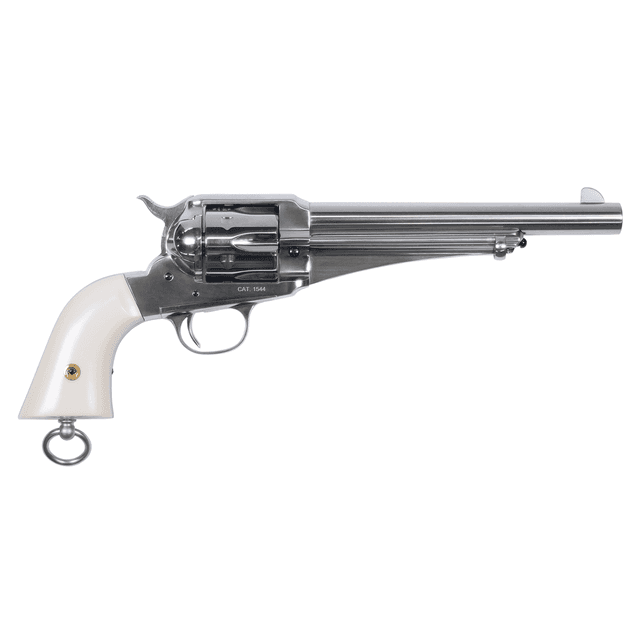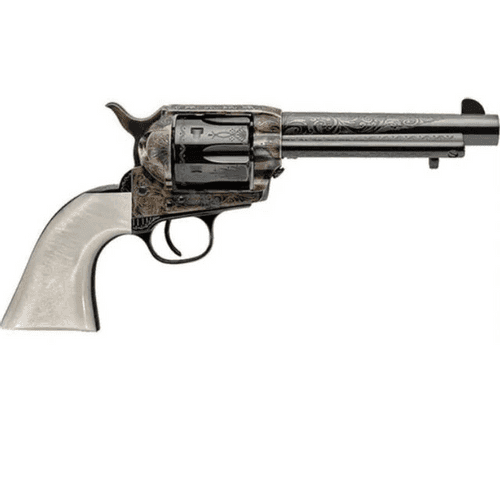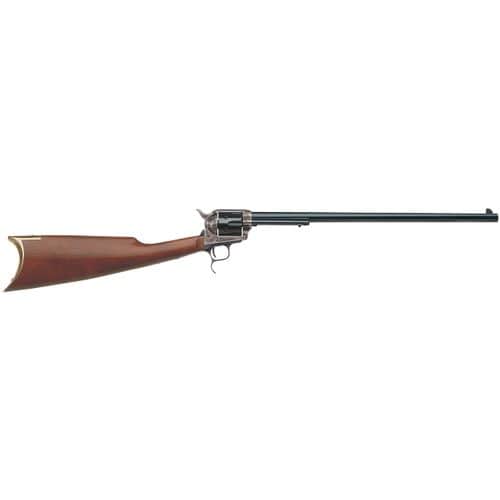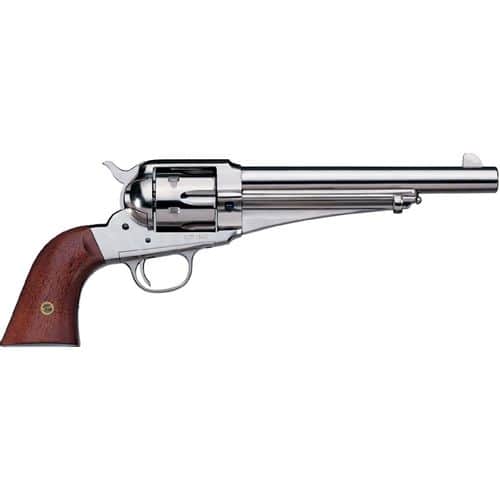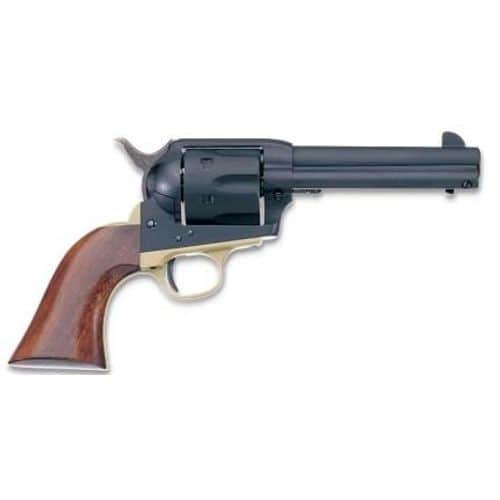






























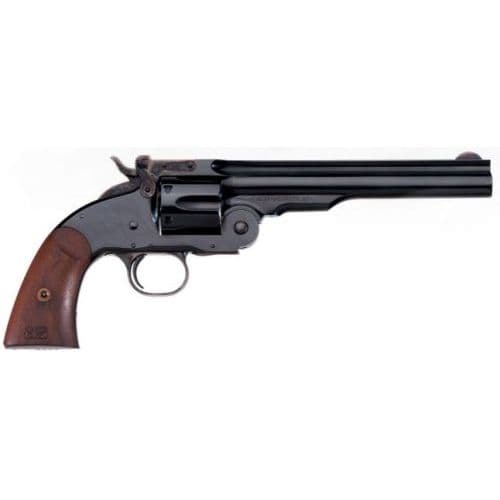

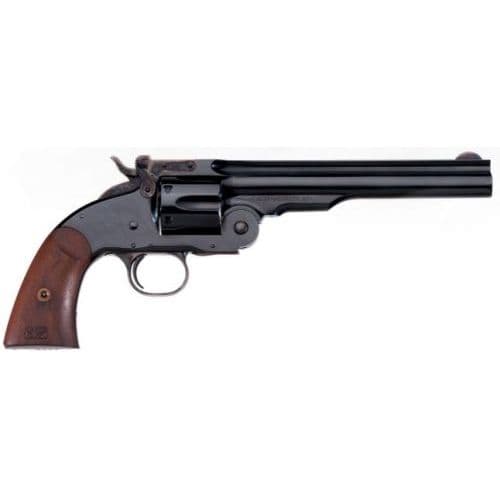
A. Uberti 1875 No. 3 .45 Colt 7" Top Break Revolver
$899.99
Please Allow 4-5 Business Days for In Store Pickup

The Legendary Schofield Revolver: A Deep Dive into American Firearm History and Modern Appeal
For enthusiasts of American history, collectors of classic firearms, or participants in disciplines like Cowboy Action Shooting, few sidearms resonate with the same iconic presence as the Schofield Revolver. This remarkable "Top Break" pistol, originally designed by Major George Schofield, stands as a testament to innovation during a pivotal era of the American West. Its enduring legacy is a blend of historical significance, unique mechanical design, and a captivating aesthetic that continues to draw admirers.
What Makes the Schofield Revolver a Must-Have for Collectors and Enthusiasts?
The Schofield Revolver is more than just a firearm; it's a tangible piece of frontier history. Its design was revolutionary for its time, addressing critical needs faced by cavalry soldiers in the rugged landscapes of the American West. If you're searching for a firearm that offers a blend of historical accuracy, practical innovation, and a compelling backstory, the Schofield stands out. It's often sought after by:
- Historical Reenactors: Providing unparalleled authenticity for living history displays and events.
- Firearm Collectors: Representing a unique and significant chapter in handgun development.
- Cowboy Action Shooters (CAS): Offering a historically correct and competitive option for various categories.
- Old West Enthusiasts: For anyone fascinated by the era of cowboys, lawmen, and outlaws, owning a Schofield connects them directly to that bygone age.
- Those Seeking Unique Mechanisms: The top-break design is a fascinating engineering marvel, distinct from many other revolvers of its period.
This revolver solves the problem of how to acquire a truly authentic and functional piece of the Old West. It offers a unique alternative to more common single-action designs, providing a distinctive experience for handling and shooting.
A Cavalry Pistol Born of Necessity: The Schofield's Origins
The genesis of the Schofield Revolver lies in the U.S. Army's need for a more efficient cavalry sidearm in the years following the Civil War. While the Colt Single Action Army (SAA) was also adopted around the same time, Major George Schofield, an ordnance officer, recognized a crucial deficiency: reloading on horseback was cumbersome with the SAA's side-loading gate and individual ejector rod.
Schofield's ingenious solution was the "Top Break" design. This mechanism allowed the user to unlatch the barrel and cylinder assembly, tilting it downwards. As it broke open, an integrated star ejector automatically pushed out all spent cartridges simultaneously. This innovation dramatically reduced reloading time, making it possible for a cavalryman to eject spent cases and reload fresh ammunition with just one hand, while maintaining control of their horse with the other. This efficient operation provided a significant tactical advantage in skirmishes, where speed was paramount.
The U.S. Army adopted the Schofield in 1875, designating it the Smith & Wesson Model 3, Schofield variant. It saw service alongside the Colt SAA, with both revolvers earning their stripes in the hands of U.S. Cavalry troopers during the Indian Wars. While the .45 S&W (Schofield) cartridge it was designed for was slightly shorter than the .45 Colt, allowing it to chamber in Colt revolvers but preventing the longer .45 Colt from chambering in the Schofield, this was a deliberate design choice aimed at simplifying logistics and preventing misfires with incompatible ammunition.
Understanding the "2nd Model" Schofield: Evolution and Refinement
The Schofield revolver underwent minor revisions during its production life. The "2nd Model," like the one represented by UPC 037084485003, represents a refined version of Schofield's original concept. These improvements often focused on subtle enhancements to the latch mechanism, frame strength, or internal components, aiming for greater durability and reliability in the field. While differences between the 1st and 2nd Models are often subtle to the untrained eye, the 2nd Model is generally considered the more perfected and robust design, reflecting lessons learned from initial military field use.
Exploring the Mechanical Ingenuity: How Does a Top Break Work?
At the heart of the Schofield's appeal is its distinctive top-break action. Unlike the fixed-frame, loading-gate designs common at the time, the Schofield pivots open:
- Latching Mechanism: A robust latch, typically located on the topstrap, securely locks the barrel and cylinder assembly to the frame.
- Break-Open Action: To reload, the user presses the release catch (often thumb-operated) and rotates the barrel and cylinder assembly downward. This action simultaneously activates the automatic star ejector.
- Automatic Ejection: As the revolver breaks open, an ejector rod, connected to a star-shaped plate, pushes all cartridges (spent or live) out of the cylinder chambers in unison. This clears the cylinder quickly and efficiently.
- Reloading: New cartridges are then easily dropped into the now-empty chambers.
- Closing and Latching: The barrel and cylinder assembly is then swung back up into position, where the latch automatically secures it, ready for firing.
This mechanism was a marvel of engineering for its time, providing a speed advantage that was unparalleled until the advent of swing-out cylinder revolvers much later. It's a key reason why the Schofield remains so popular among those who appreciate classic firearm mechanics.
Construction and Materials: Built for Durability and Aesthetics
The Schofield, both in its original form and in quality reproductions like those commonly available today, was built to withstand the rigors of military service and the demanding environment of the frontier.
- Blue Steel Frame and Backstrap: The primary components of the revolver – the frame and the backstrap – are typically crafted from high-quality blued steel. Bluing is a passivation process that provides a layer of corrosion resistance and gives the steel its characteristic deep, lustrous black or dark blue finish. This not only protects the metal but also contributes significantly to the firearm's classic aesthetic.
- Case-Hardened Trigger Guard: The trigger guard, a crucial component that experiences significant handling and wear, often features a case-hardened finish. Case hardening is a metallurgical process where the surface of steel is hardened while the core remains softer and tougher. This creates a durable, wear-resistant outer layer. Additionally, the process often results in beautiful, mottled patterns of blues, browns, and purples, giving the trigger guard a distinctive and appealing marbled appearance that sets it apart. This combination of strength and beauty is a hallmark of quality historical firearm manufacturing.
The Enduring Appeal of the .45 Colt Cartridge
The Schofield revolver, particularly reproductions like the one with UPC 037084485003, is chambered in the venerable .45 Colt (.45 LC) cartridge. This caliber is synonymous with the Old West, developed specifically for revolvers like the Colt Single Action Army and later becoming a staple.
- Historical Authenticity: For collectors and reenactors, using a .45 Colt chambered Schofield adds another layer of historical accuracy to their experience.
- Modern Availability: Unlike some obscure historical calibers, .45 Colt ammunition is widely available today, produced by numerous manufacturers. This ensures that owners can easily acquire ammunition for target practice, Cowboy Action Shooting, or simply enjoying their historic firearm.
- Recoil and Performance: The .45 Colt offers a manageable recoil impulse in a revolver of the Schofield's size and weight, making it comfortable to shoot. Its large, slow-moving projectile delivers significant energy, making it a powerful and effective cartridge.
Caring for Your Schofield Revolver: Maintenance for Longevity
To ensure your Schofield revolver (UPC 037084485003) remains a cherished and functional piece for years to come, proper care and maintenance are essential.
- Regular Cleaning: After each shooting session, clean the bore, cylinder chambers, and all exposed metal surfaces. Use appropriate bore cleaner, brushes, and patches to remove powder residue and lead fouling.
- Lubrication: Apply a thin layer of gun oil to all moving parts, especially the pivot points of the top-break mechanism, the ejector rod, and the hammer and trigger assemblies. This prevents corrosion and ensures smooth operation.
- Storage: Store your Schofield in a cool, dry place, ideally in a padded gun case or a humidity-controlled safe. Avoid extreme temperature fluctuations.
- Ammunition Choice: While modern .45 Colt ammunition is generally safe for quality reproductions, always consult the manufacturer's recommendations. Avoid hot loads or +P ammunition unless specifically stated as compatible, as these can put undue stress on historical designs. Most Schofield owners opt for standard or light cowboy loads, which are both historically appropriate and gentle on the firearm.
- Professional Inspection: Consider having your revolver inspected by a qualified gunsmith periodically, especially if you shoot it frequently.
Where Can I Find a Reliable Schofield Reproduction?
When seeking to acquire a high-quality reproduction of a historically significant firearm like the Schofield Revolver, it's crucial to choose a reputable dealer. Many enthusiasts and collectors turn to trusted sources that specialize in firearms, ensuring authenticity, fair pricing, and reliable service. For example, DEGuns offers a wide selection of historically significant firearms, including detailed reproductions of the Schofield revolver, ensuring you receive a product that meets exacting standards of quality and historical accuracy. They understand the nuances of these unique pieces and can help guide you through the selection process.
The Schofield in Popular Culture and Legacy
The Schofield's place in history isn't confined to military arsenals. Its distinctive look and innovative design have cemented its status as an icon of the American West. While the Colt SAA often dominates popular imagination, the Schofield, with its unique top-break action, made appearances in the hands of both famous lawmen and notorious outlaws. Stories, often romanticized, tie it to figures like Jesse James, who reportedly favored its fast reloading capabilities, and Wyatt Earp.
Today, its legacy continues to thrive, not just in museum exhibits, but actively in the hands of shooters and collectors who appreciate its blend of form and function. It remains a prime example of American ingenuity, solving a practical problem with an elegant mechanical solution that continues to fascinate over a century later.
Conclusion: Owning a Piece of the Frontier
The Schofield Revolver, particularly a meticulously crafted reproduction like the 2nd Model in .45 Colt with a 7" barrel (UPC 037084485003), offers more than just a shooting experience. It provides a direct connection to the rugged frontier, the U.S. Cavalry, and a defining era of American expansion. Its efficient break-open design, once a critical advantage for cavalrymen, remains a captivating feature for modern users.
Whether your interest lies in historical reenactment, competitive shooting, or simply owning a beautiful and historically significant firearm, the Schofield represents an exceptional choice. It embodies the spirit of innovation, durability, and the timeless appeal of the Old West. Owning one means holding a piece of living history in your hands, ready to be appreciated for its engineering brilliance and its undeniable charm.
Product Specifications: Schofield 2nd Model Revolver
| Feature | Detail |
|---|---|
| Caliber | .45 Colt |
| Barrel Length | 7 inches |
| Materials | Blue Steel Frame and Backstrap, Case-Hardened Trigger Guard |
| Model | 2nd Model |
| SKU | 348500 |
| UPC | 037084485003 |
Specifications
Explore the specific details and characteristics
- Model
- 1875 No. 3
- Manufacturer
- A. Uberti
- Barrel Length
- 7"
- Handguns
- Revolver
- Caliber
- 45 LC / 45 COLT
- SKU
- 348500