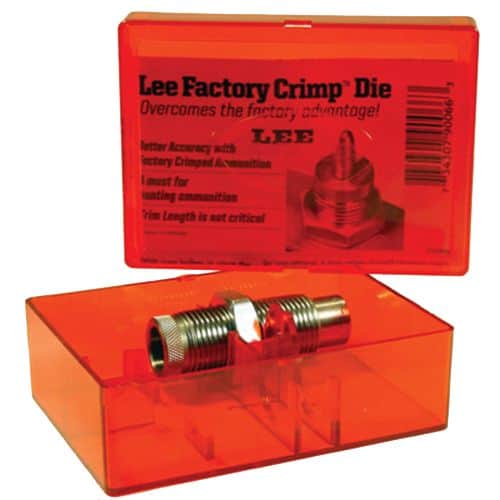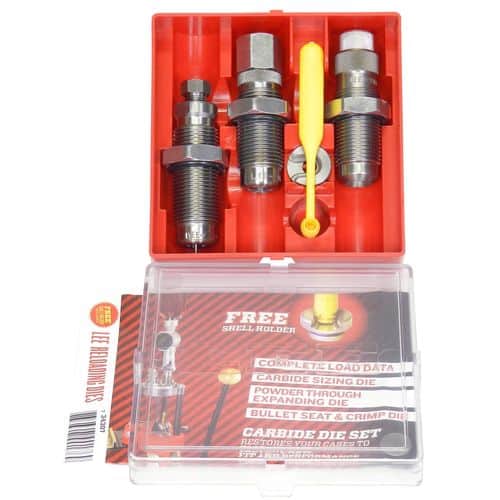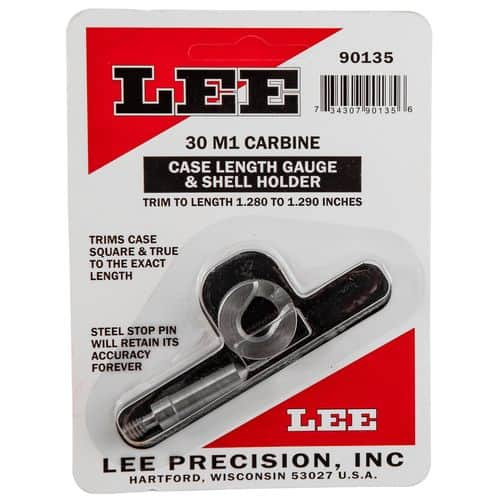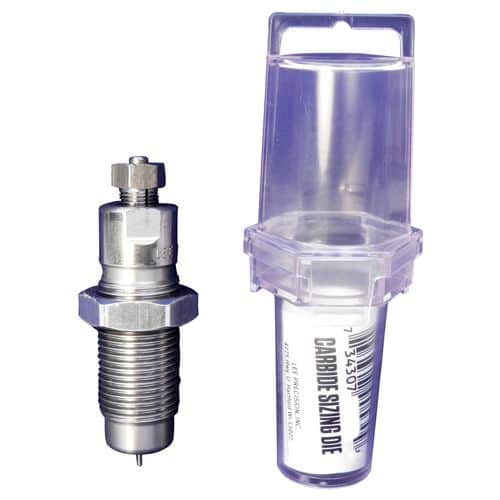




















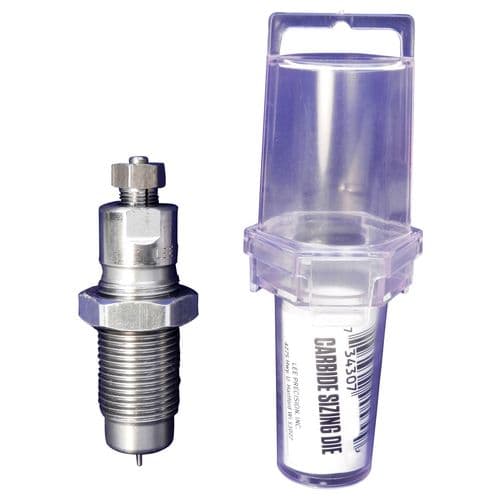

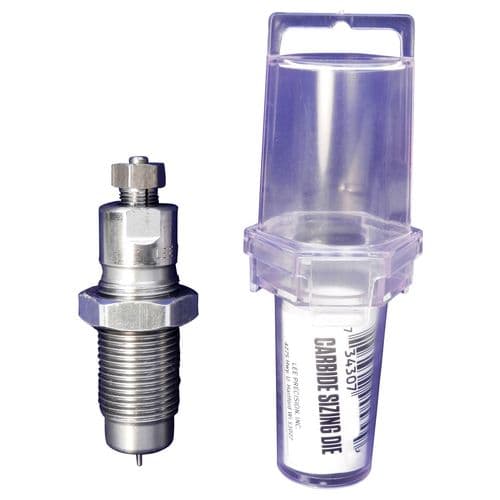
Lee Carbide Crimp Die 30 M1 Carbine
$0.00
Please Allow 4-5 Business Days for In Store Pickup

Lee Carbide Crimp Die for .30 M1 Carbine: Achieve Unrivaled Reloading Consistency and Reliability
For any serious reloader committed to precision and reliability, especially when working with the iconic .30 M1 Carbine, the Lee Carbide Crimp Die is an indispensable tool. This specialized die, designed to deliver a uniform and consistent crimp on every cartridge, addresses some of the most critical challenges faced by handloaders: ensuring optimal bullet retention, preventing bullet setback, and maximizing feeding reliability. Identifying this essential piece of equipment is straightforward with its UPC: 734307908616. This guide will delve deep into why this specific die is a game-changer for your .30 M1 Carbine reloading efforts, offering insights into its unique features, practical applications, and the significant advantages it brings to your bench.
Who Needs a Dedicated Crimp Die for .30 M1 Carbine Reloading?
If you handload ammunition for your .30 M1 Carbine, whether for target shooting, plinking, or maintaining a historical firearm, you are the ideal candidate for the Lee Carbide Crimp Die. This tool is particularly beneficial for:
- Enthusiasts of the .30 M1 Carbine: Given the semi-automatic action of the M1 Carbine, consistent feeding and bullet stability are paramount.
- Reloaders seeking ultimate consistency: Eliminate variables in your crimp to achieve more precise ammunition.
- Shooters experiencing bullet setback: A common issue with tubular magazines or semi-automatic firearms where recoil can push bullets deeper into the case.
- Individuals aiming for enhanced accuracy: A uniform crimp contributes significantly to consistent pressures and projectile launch.
- Those looking to extend brass life: Proper crimping reduces stress on the case mouth.
- Anyone concerned with reloading safety: Secure bullet retention is a key safety measure.
Why is Crimping Critical for .30 M1 Carbine Ammunition?
Crimping, in the context of reloading, refers to the process of applying pressure to the case mouth to secure the bullet in place. While neck tension primarily holds the bullet, a proper crimp provides additional retention and performs several other vital functions:
- Preventing Bullet Setback: This is perhaps the most crucial role for a crimp, especially in semi-automatic firearms like the M1 Carbine. During recoil or when cartridges are repeatedly chambered and ejected, the bullet can be pushed back into the case, increasing chamber pressure to dangerous levels. A strong crimp prevents this.
- Ensuring Reliable Feeding: A consistent crimp helps create a uniform cartridge profile, which is essential for smooth feeding from magazines and into the chamber. Irregularly crimped rounds can snag or jam.
- Optimizing Powder Burn: A crimp can create a slight resistance to the bullet's initial movement, allowing powder to ignite and build pressure more consistently, leading to better and more uniform powder burn. This translates directly to improved accuracy and velocity consistency.
- Protecting Projectiles: For cast bullets, a crimp can help prevent lubricant from being scraped off as the bullet enters the chamber. For jacketed bullets, it prevents cosmetic damage to the bullet nose during feeding.
- Enhanced Overall Performance: The cumulative effect of these factors is a more reliable, accurate, and safer cartridge.
Understanding Bullet Setback and How the Lee Carbide Crimp Die Solves It
Bullet setback is a silent killer in reloading. It occurs when a bullet is pushed deeper into the cartridge case than intended. This reduces the internal case volume, causing a rapid and dangerous spike in chamber pressure upon firing. For the .30 M1 Carbine, which operates with relatively high pressures in a compact case, even minor setback can be hazardous.
Common scenarios leading to setback:
- Recoil in magazine-fed firearms: The inertia of bullets in a magazine can cause them to move forward and then back against the magazine wall during recoil, gradually pushing them into the case.
- Cycling through semi-automatic actions: When a round is chambered, the bullet tip strikes the feed ramp. If the bullet isn't held securely, this impact can force it deeper into the case.
- Improper handling: Dropping cartridges or rough handling can also contribute.
The Lee Carbide Crimp Die specifically addresses bullet setback through its unique design. Unlike traditional roll or taper crimps that merely bend the case mouth, Lee's Factory Crimp Die (the product this falls under) utilizes a collet-style crimp that compresses the case mouth uniformly around the bullet. This creates an incredibly strong and concentric hold, significantly reducing the likelihood of setback under dynamic conditions.
The Innovative Design of the Lee Carbide Crimp Die (UPC: 734307908616)
The core of the Lee Carbide Crimp Die's effectiveness lies in its innovative use of a carbide sizing ring and a collet-style crimping mechanism. This is not just another crimping die; it’s a complete solution for perfecting your .30 M1 Carbine ammunition.
How It Works:
- Post-Sizing with Carbide Ring: As the loaded cartridge enters the die, it passes through a carbide ring. This ring ensures that the case is resized back to factory dimensions after the bullet has been seated. This step is crucial because seating a bullet can sometimes expand the case slightly, making it difficult to chamber. The carbide ring precisely sizes the case while leaving the bullet undisturbed. This also helps straighten any slight bulges caused by bullet seating.
- Collet-Style Crimp: Once the case passes the sizing ring, the die's unique collet system engages. A series of four hardened steel fingers (collets) are actuated by the downstroke of your press, uniformly pressing the case mouth inward around the bullet. This creates a highly concentric and secure crimp that grips the bullet circumferentially, rather than just at the edge of the case mouth.
- Adjustable Crimp: The depth of the crimp is easily adjustable by turning the die body in or out, allowing reloaders to fine-tune the amount of crimp applied to match their specific needs and bullet types.
This two-stage process (sizing then crimping) ensures that every cartridge is not only perfectly crimped but also resized to factory specifications, guaranteeing reliable feeding and chambering in your .30 M1 Carbine.
Unpacking the Benefits: Why Choose This Die for Your .30 M1 Carbine Reloads?
Investing in the Lee Carbide Crimp Die offers a multitude of advantages that translate directly into better shooting experiences and safer reloading practices.
1. Unmatched Consistency and Uniformity:
- Consistent Crimp Pressure: The collet design applies pressure uniformly around the case mouth, unlike roll crimps which can be uneven, or taper crimps which are less secure. This leads to more consistent bullet retention and pull force.
- Uniform Case Dimensions: The post-sizing carbide ring ensures every loaded round is resized to factory specifications, regardless of case thickness variations or minor bulges from bullet seating. This guarantees smooth chambering shot after shot.
2. Enhanced Safety Against Bullet Setback:
- Superior Bullet Retention: The strong, concentric crimp created by the collet dramatically reduces the risk of bullet setback during recoil or feeding, safeguarding against dangerous pressure spikes. This is particularly vital for the semi-automatic .30 M1 Carbine platform.
3. Improved Accuracy and Velocity Consistency:
- Optimized Powder Burn: By providing consistent resistance to bullet movement, the crimp allows for more complete and uniform powder ignition, leading to more consistent muzzle velocities and improved accuracy groups downrange.
- Reduced Barrel Fouling: A consistent crimp can contribute to better gas seal and less unburnt powder, potentially reducing barrel fouling over time.
4. Extended Brass Life and Versatility:
- Gentle on Brass: Unlike some crimp methods that can over-stress or deform the case mouth, the Lee Carbide Crimp Die's design is gentler, contributing to longer case life and more reloads per piece of brass.
- Accommodates Various Bullet Types: The design works exceptionally well with both jacketed and cast bullets, providing a secure crimp without deforming the bullet. It's particularly useful for cast bullets where lubricant retention is important.
- No Cannelure Required: While a cannelure (a groove on the bullet designed for crimping) is helpful, this die can effectively crimp bullets without one, adding to its versatility.
5. Simplified Reloading Process:
- Easy Setup and Adjustment: The die is intuitive to set up and adjust for desired crimp depth, making it user-friendly for both novice and experienced reloaders.
- Reduced Malfunctions: By ensuring every round is perfectly sized and crimped, you drastically cut down on feeding issues, failures to extract, and other common malfunctions in semi-automatic firearms.
Real-World Applications and Use Cases for .30 M1 Carbine Reloaders
The versatility and performance of the Lee Carbide Crimp Die make it ideal for several specific scenarios concerning the .30 M1 Carbine:
- Competitive Shooting (Vintage Rifle Matches): For shooters participating in M1 Carbine matches, consistency is key. This die helps ensure every round performs identically, contributing to tighter groups and higher scores.
- Hunting with the .30 M1 Carbine: If you use your M1 Carbine for small game or varmint hunting, reliable feeding and consistent ballistics are crucial for ethical and effective shots. The secure crimp prevents any bullet movement under field conditions.
- High-Volume Plinking and Training: When churning out hundreds or thousands of rounds for practice, the die ensures every round is safe and reliable, minimizing frustrating range stoppages due to ammunition issues.
- Reloading for Multiple M1 Carbines: If you own more than one .30 M1 Carbine, consistent ammunition across different firearms becomes even more important. The die helps standardize your output.
- Using Reclaimed Brass: Often, reloaders use once-fired brass that may have minor inconsistencies. The post-sizing feature of this die helps bring all cases back to uniform dimensions, making them chamber reliably.
Taper Crimp vs. Roll Crimp vs. Lee Carbide Crimp: A Critical Distinction
Reloaders often encounter different types of crimps, and understanding the differences is key to appreciating the superiority of the Lee Carbide Crimp Die for the .30 M1 Carbine.
- Taper Crimp: Primarily used for handgun cartridges and rifle cartridges that headspace on the case mouth (like .223 Rem). It gently removes the flare from the case mouth and applies a slight taper to the case, pressing it against the bullet. While good for accuracy in some applications, it offers minimal bullet retention against setback and isn't ideal for heavy recoil or magazine-fed semi-automatics.
- Roll Crimp: Typically used for revolver cartridges and rifle cartridges that headspace on the rim or shoulder. It rolls the case mouth into a cannelure (a groove) on the bullet. This provides a very strong hold, but if done improperly or without a cannelure, it can buckle the case or deform the bullet. It can also be less concentric than other methods.
- Lee Carbide Crimp (Collet Crimp): This method, exemplified by the Lee Carbide Crimp Die, is a hybrid and arguably superior approach. It provides a full, circumferential crimp on the bullet without rolling the case mouth into a cannelure, making it more versatile. The carbide sizing ring also ensures post-sizing for consistent case dimensions. For semi-automatic rifles like the .30 M1 Carbine where positive chambering and strong setback resistance are paramount, the collet crimp excels. It offers the secure hold of a good roll crimp but with the concentricity and versatility often associated with taper crimps, plus the added benefit of post-sizing.
Setup and Maintenance of Your Lee Carbide Crimp Die
Setting up and maintaining your Lee Carbide Crimp Die (UPC: 734307908616) is straightforward, ensuring years of reliable performance.
Setup Instructions:
- Mount the Die: Thread the die into your press. If using a single-stage press, ensure it's in a station that allows full stroke. On a progressive press, it's typically the final station.
- Adjust for Bullet Contact: With the ram in the fully raised position (shell holder at its highest point), thread the die down until it firmly contacts the shell holder.
- Set Crimp Depth: Back the die body out one full turn. Now, lower the ram. Place a loaded, but uncrimped, round into the shell holder. Raise the ram to the top of its stroke.
- Gradual Adjustment: Slowly turn the die body down (clockwise) in small increments (e.g., 1/8 to 1/4 turn at a time). Cycle the round through the crimp process with each adjustment.
- Test and Verify: Continue adjusting until you achieve the desired amount of crimp. The goal is to provide a firm grip on the bullet without deforming the bullet or buckling the case. A good test is to try and push the bullet into the case by hand; it should be very difficult or impossible. For semi-autos, you might also perform a "plunk test" in your rifle's chamber or a case gauge to ensure smooth chambering.
Maintenance Tips:
- Clean Regularly: After each reloading session, especially if using significant amounts of case lube or if powder residue builds up, wipe down the die with a clean cloth.
- Remove Residue: Periodically, disassemble the die (if applicable) and clean any powder residue or brass shavings from the collets and carbide ring using a soft brush and a non-corrosive solvent.
- Light Lubrication: A very light coat of high-quality gun oil on the exterior and moving parts (but not the carbide ring or collet fingers where they contact the brass/bullet) can prevent rust and ensure smooth operation.
- Proper Storage: Store the die in its original box or a dedicated die box to protect it from dust, moisture, and impact.
Troubleshooting Common Crimping Issues
Even with an excellent die like the Lee Carbide Crimp Die, minor issues can sometimes arise. Here are solutions to common crimping problems:
- Crimping Too Much / Buckled Cases:
- Solution: Back the die out slightly (counter-clockwise). You're applying too much pressure or trying to crimp too aggressively. The crimp should secure the bullet, not deform the case.
- Not Enough Crimp / Bullet Setback Still Occurs:
- Solution: Thread the die in slightly (clockwise). Ensure the die is fully contacting the shell holder at the top of the ram's stroke before making fine adjustments.
- Inconsistent Crimp:
- Solution: Check for variations in case length. While the Lee die is somewhat forgiving, extreme variations can lead to inconsistent crimps. Trim your brass to a uniform length. Also, ensure your bullet seating depth is consistent.
- Bullet Deformation:
- Solution: You might be over-crimping, or the bullet type is not suitable for the level of crimp applied. Reduce crimp. Ensure your bullet diameter is correct for the caliber.
- Difficult to Chamber:
- Solution: While the carbide ring post-sizes, ensure you haven't introduced another issue. Check overall cartridge length (OAL) against specifications. Also, ensure your sizing die is correctly set up. The Lee Carbide Crimp Die primarily fixes minor case bulges after bullet seating.
Why Lee Precision Stands Out for Your Reloading Needs
Lee Precision has a long-standing reputation in the reloading community for producing innovative, high-quality tools at an accessible price point. The Lee Carbide Crimp Die (UPC: 734307908616) for the .30 M1 Carbine is a testament to their commitment to practical engineering. Lee's focus on user-friendly designs that deliver superior performance makes them a top choice for reloaders globally. Their commitment to improving the reloading process, exemplified by the unique collet crimp design, ensures that hobbyists and serious shooters alike can produce consistent, safe, and accurate ammunition.
Secure Your Lee Carbide Crimp Die Today
Optimizing your .30 M1 Carbine reloading process is not just about saving money; it's about achieving unmatched consistency, reliability, and safety. The Lee Carbide Crimp Die (UPC: 734307908616) is the single most effective tool to prevent bullet setback, ensure flawless feeding, and enhance the overall accuracy of your handloaded .30 M1 Carbine ammunition. Elevate your reloading game and experience the confidence that comes with perfectly crafted cartridges.
This essential tool is readily available. You can find the Lee Carbide Crimp Die for .30 M1 Carbine at DEGuns, your trusted source for reloading equipment and firearms. Visit deguns.com to add this indispensable die to your reloading setup and take the first step towards superior ammunition.
| Feature | Description | Benefit |
|---|---|---|
| UPC | 734307908616 | Easy identification for ordering |
| Carbide Sizing Ring | Post-sizes the loaded cartridge | Ensures factory dimensions for reliable chambering |
| Collet-Style Crimp | Four-finger collet system | Superior, concentric bullet retention |
| Caliber | .30 M1 Carbine | Specifically designed for this popular cartridge |
| Brand | Lee Precision | Trusted name in reloading for quality and innovation |
Specifications
Explore the specific details and characteristics
- SKU
- 21665