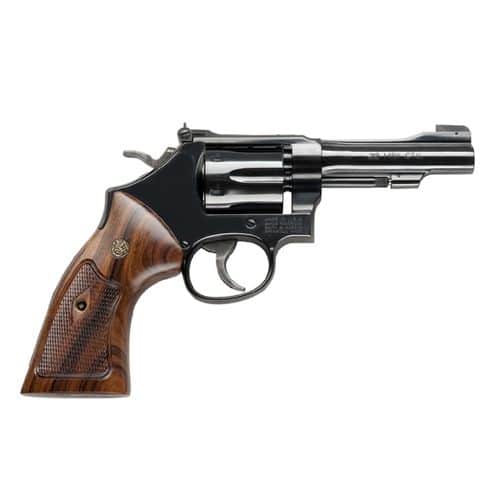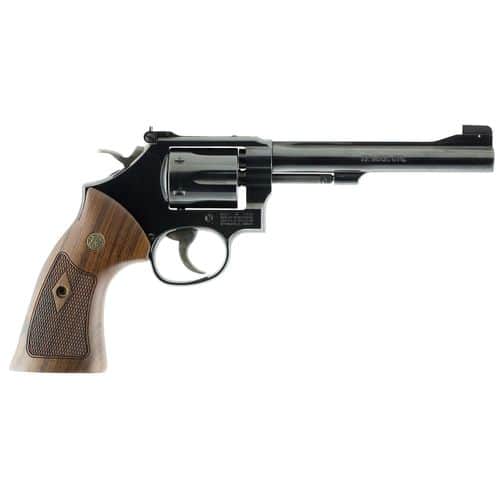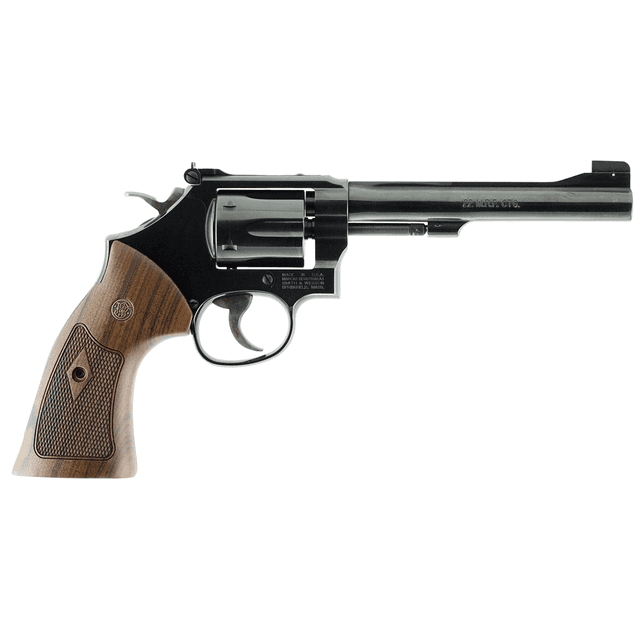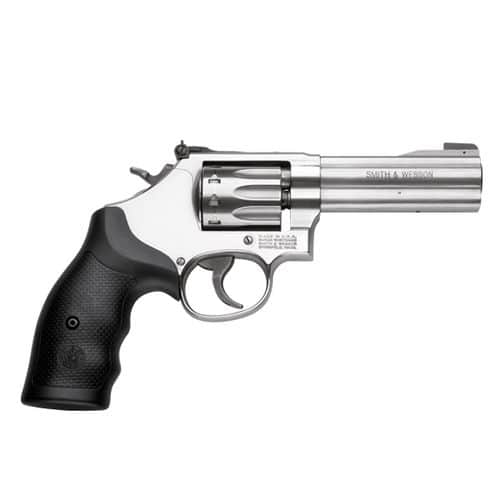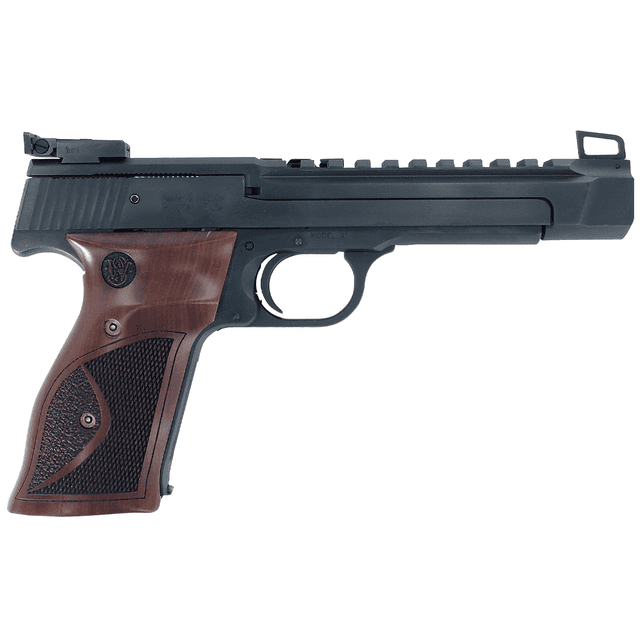























Smith & Wesson Model 48 .22 Mag Pistol 4" Blued Barrel 6 Rounds 2
$0.00
Please Allow 4-5 Business Days for In Store Pickup

Discover the Enduring Legacy: Smith & Wesson Model 48 .22 Magnum Revolver
Are you searching for a firearm that beautifully marries historical craftsmanship with modern reliability? Do you appreciate the heritage of classic firearms while demanding contemporary performance and safety features? The Smith & Wesson Model 48 .22 Magnum Revolver stands as a magnificent answer, offering a tangible piece of firearms history designed for today's discerning shooter and collector. Available through reputable dealers like DEGuns, this iconic K-frame revolver is more than just a handgun; it's an experience, a training tool, a collector's prized possession, and a reliable companion for a variety of shooting pursuits.
For those who frequently ask, "What makes a revolver a timeless classic?" or "Which handgun offers both recreational fun and practical utility?", the Model 48 is an exemplary choice. It harks back to an era of legendary Smith & Wesson revolvers, meticulously crafted with wood grip designs and a bright blue finish that evoke the most famous and collectible guns ever produced by the esteemed manufacturer. Each Model 48 in the "Classics" series is rooted in a design celebrated for its legendary performance, then thoughtfully enhanced with modern advantages to deliver the timeless best of both worlds.
The Enduring Appeal of the Smith & Wesson K-Frame and .22 Magnum Caliber
The Smith & Wesson Model 48 is built on the renowned K-frame, a medium-sized frame that has been a cornerstone of Smith & Wesson's revolver lineup for over a century. Known for its perfect balance, comfortable ergonomics, and inherent accuracy, the K-frame provides a stable platform ideal for various shooting disciplines. Its medium size makes it highly maneuverable without sacrificing stability, fitting comfortably in a wide range of hand sizes.
Chambered in .22 Magnum (also known as .22 WMR - Winchester Magnum Rimfire), the Model 48 offers a unique set of advantages. Many shooters ponder, "Is a .22 Magnum revolver suitable for self-defense or hunting?" and "What are the benefits of shooting .22 WMR?". The .22 Magnum cartridge delivers significantly more velocity and energy than the standard .22 Long Rifle, making it a surprisingly potent round for its size. This increased power translates to flatter trajectories at longer ranges, improved penetration, and more decisive performance on small game. For recreational shooting, the .22 Magnum provides a more pronounced recoil impulse than .22 LR, offering a more engaging shooting experience while still being highly manageable, especially for new shooters transitioning to centerfire calibers. It's an excellent training tool for mastering revolver fundamentals without the expense or harsh recoil of larger calibers, yet it offers enough zest to keep seasoned shooters engaged. For handgun hunters, its precision and energy are well-suited for taking varmints, small game, and even certain predators at reasonable distances.
Craftsmanship and Design: A Return to Excellence
When considering a classic firearm, the questions "What distinguishes Smith & Wesson's 'Classics' line?" and "Why are traditional materials like carbon steel and wood still preferred by some?" often arise. The Model 48 exemplifies Smith & Wesson's unwavering commitment to traditional firearm aesthetics and robust construction. The bright blue finish applied to the carbon steel frame and cylinder is a testament to classic gun-making artistry. This deep, lustrous blue not only provides excellent corrosion resistance but also imparts a rich, timeless look that improves with age and proper care, making it highly desirable for collectors. The finish is not merely cosmetic; it reflects the meticulous polishing and bluing processes that were hallmarks of Smith & Wesson's golden era.
The wood grip is another defining feature, carefully shaped to offer both aesthetic appeal and a secure, comfortable hold. Unlike modern synthetic grips, wood grips provide a warm, tactile feel and a traditional appearance that complements the revolver's overall classic design. This attention to detail in material selection and finish work underscores why the Model 48 is often sought after by those seeking a blend of historical authenticity and functional excellence.
Modern Safety: The Internal Lock Mechanism
For those concerned with safe firearm storage and handling, a common question is, "How does the internal lock mechanism on a Smith & Wesson revolver work, and what are its benefits?". The Smith & Wesson Model 48 incorporates a discreet yet effective internal lock mechanism, a feature designed to enhance safety and prevent unauthorized use. This mechanism, located adjacent to and slightly over the thumb-piece, prevents both hammer and trigger motion when engaged, rendering the revolver inoperable until unlocked with the provided key.
How to Engage the Internal Lock:
- Step 1: Ensure the revolver is completely unloaded by opening the cylinder and visually inspecting all charge holes.
- Step 2: With the cylinder open, hold the revolver in one hand.
- Step 3: Insert the key into the lock on the left side of the frame and turn it approximately 90 degrees counter-clockwise. You will feel a definite stop and detent, indicating the lock is engaged.
- Step 4: On revolvers with exposed hammers, a flag marked “LOCKED” will become visible, providing a clear visual indicator of the lock's status.
To Disengage the Internal Lock:
- Step 1: With the cylinder open, hold the revolver in one hand.
- Step 2: Insert the key and turn it approximately 90 degrees in a clockwise direction. A definite stop and detent will be felt.
- Step 3: The “LOCKED” flag will return to its hidden, unlocked position on revolvers with exposed hammers.
- Important Safety Note: Always ensure your finger is off the trigger and outside the trigger guard, and the revolver is pointed in a safe direction, before engaging or disengaging the lock. Even when locked, always assume the revolver is loaded during this procedure.
The position of the cylinder has no relationship to the locked status of the revolver; the cylinder may be opened or closed whether the revolver is locked or unlocked. This feature provides peace of mind, knowing that your Model 48 can be securely deactivated when not in use, adding a layer of protection against accidental discharge or misuse.
Operating Your Model 48: Loading, Firing, and Decocking
Understanding the correct and safe operation of any firearm is paramount. Users often ask, "What is the proper way to load and fire a Smith & Wesson revolver?" and "How do I safely decock a revolver without firing it?". The Model 48, like all revolvers, requires adherence to specific safety protocols.
Loading the Smith & Wesson Model 48:
- Prioritize Safety: Never load your revolver until you have thoroughly read and fully understand the owner's manual. Do not load the revolver until you are at the shooting site and fully prepared to fire.
- Unlock (if engaged): If the internal lock is engaged, unlock it using the provided key before proceeding.
- Muzzle Discipline: Hold the revolver in one hand with the muzzle pointed in a safe direction (away from yourself and others).
- Finger Off Trigger: Always keep your finger off the trigger and out of the trigger guard.
- Open Cylinder: Press the thumbpiece forward to unlock the cylinder, then push the cylinder to the left until it swings open.
- Insert Ammunition: Place a round of the correct .22 Magnum ammunition in each of the six charge holes.
- Close Cylinder: Grasp the revolver in your shooting hand (finger still outside the trigger guard) and push the cylinder back into the frame until it locks securely into place.
- Your revolver is now loaded, with the hammer in the "at rest" position.
Firing the Smith & Wesson Model 48:
The Model 48 offers two distinct firing modes:
- Double Action (DA) Firing:
- This is the simpler and often preferred mode for rapid firing or self-defense scenarios.
- Procedure: Keep your finger off the trigger until you are ready to fire. To fire, simply pull the trigger fully to the rear. This action simultaneously cocks the hammer and releases it, firing the revolver.
- Reset: After firing, you must allow the trigger to move fully forward before you can fire another shot. Failure to do so will prevent the lockwork from fully cycling.
- Safety: Do not touch or interfere with the travel of the hammer during double action firing. Immediately after firing, remove your finger from the trigger and place it outside the trigger guard until you are ready for the next shot.
- Single Action (SA) Firing:
- This mode offers a lighter, crisper trigger pull, ideal for precision target shooting or hunting where accuracy is paramount.
- Procedure: Keep your finger off the trigger until ready to fire. Use your non-shooting hand to place on the hammer spur. Pull the hammer fully rearward until it is cocked. This action will also cause the trigger to move rearward. The revolver is now cocked in single-action mode, requiring significantly less trigger pressure and travel to fire.
- Fire: Pull the trigger and hold it rearward.
- Reset: After firing, allow the trigger to move fully forward before another shot can be fired.
- WARNING: Only place the revolver in the single-action (cocked) mode when you are fully prepared to fire. Exercise extreme care, as only minimal trigger pressure is needed to discharge the firearm in this mode.
Crucial Safety Warning on "Staging" the Trigger:
It is imperative to understand and avoid the dangerous practice of "staging" the trigger. Staging is the act of pulling the trigger rearward to—and stopping just short of—the point where the hammer falls and the handgun fires. Such manipulation reduces your control of the handgun and creates a serious risk of unintentional discharge, which can lead to personal injury or death. Always keep your finger out of the trigger guard until you have made the conscious decision to fire. If you decide not to fire, release the trigger completely and immediately remove your finger from the trigger guard.
Decocking the Smith & Wesson Model 48 (from Single Action Cocked Position):
If you have cocked the hammer for single-action firing but decide not to shoot, you must safely decock the revolver. This procedure requires utmost care and practice with an unloaded firearm first.
- Step 1: Point in Safe Direction: Continue to point the firearm in a safe direction.
- Step 2: Thumb Block: Place the thumb of your free hand (non-shooting hand) between the hammer and the frame of the handgun. This prevents the hammer from moving fully forward if it slips.
- Step 3: Control Hammer: Place the thumb of your firing hand on the hammer spur. You must always maintain firm control of the hammer with your thumbs when decocking.
- Step 4: Release Trigger Pressure: Apply pressure to the trigger to release the hammer from its cocked position. Immediately after the hammer has moved forward, release the trigger and withdraw your finger from the trigger guard.
- WARNING: Failure to remove your finger from the trigger guard as soon as the hammer releases could cause the revolver to fire if your thumb slips off the hammer spur.
- Step 5: Ease Hammer Forward: Carefully ease the hammer forward while simultaneously removing your other thumb from between the hammer and frame, until the hammer is in the "at rest" position.
- Practice: Practice this decocking procedure with your unloaded revolver until you have mastered it. Always be aware of the hammer position. Never holster, carry, or store a cocked revolver. Ensure the hammer is in the "at rest" position after decocking.
Caution: Incomplete Decocking
In rare instances, incomplete decocking may occur if the trigger is not fully released immediately after the hammer begins to move forward from the cocked position. This can cause the hammer to stop between the full cock and "at rest" positions. If this happens, keep your finger off the trigger and out of the trigger guard. Return the hammer with your thumb to the fully cocked position, then properly decock the hammer to the "at rest" position following the outlined procedure.
Why the Model 48 is an Excellent Choice
The Smith & Wesson Model 48 is more than just a firearm; it's an investment in a piece of American firearms heritage, offering a shooting experience that transcends the ordinary. For those who ask, "What revolver offers versatility for multiple shooting interests?" or "Where can I find a high-quality classic revolver?", the Model 48 stands out.
- Collector's Interest: Its classic design, K-frame lineage, and faithful adherence to traditional Smith & Wesson aesthetics make it a highly desirable piece for collectors. The bright blue finish and wood grips contribute to its timeless appeal, promising to appreciate in value and aesthetic charm over time.
- Recreational Shooting: Whether it's plinking at the range, informal target practice, or simply enjoying the precise mechanics of a well-made revolver, the .22 Magnum caliber provides an economical yet engaging shooting experience. Its manageable recoil and inherent accuracy make it a joy to shoot for extended periods.
- Home Protection: While often overlooked for this role, a .22 Magnum revolver like the Model 48 can serve as a viable option for home protection, particularly for individuals sensitive to recoil or muzzle blast. The internal lock adds a layer of security for storage.
- Handgun Hunting: For small game and varmints, the .22 Magnum's enhanced velocity and energy, combined with the Model 48's precision sights, make it an effective tool for ethical hunting at appropriate distances.
The Smith & Wesson Model 48 .22 Magnum Revolver, SKU 150717, embodies Smith & Wesson's legacy of excellence. Its blend of classic design, modern safety features, and versatile performance makes it an ideal choice for both seasoned enthusiasts and those new to the world of revolvers. Find this exceptional piece of history-in-the-making at trusted retailers like DEGuns.
Specifications
| Feature | Detail |
|---|---|
| Model | 48 |
| Caliber | .22 Magnum |
| Capacity | 6 Rounds |
| Barrel Length | 4" / 10.2 cm |
| Front Sight | Pinned Patridge |
| Rear Sight | Micro-Adjustable |
| Overall Length | 9.25" / 23.5 cm |
| Action | Single/Double Action |
| Frame Size | Medium - Exposed Hammer |
| Weight | 37.6 oz / 1,066.0 g |
| Grip | Wood |
| Frame Material | Carbon Steel |
| Cylinder Material | Carbon Steel |
| Finish | Bright Blue |
| Purpose | Collector's Interest, Recreational, Home Protection, Handgun Hunting |
| SKU | 150717 |
Product Identification
| Identifier | Value |
|---|---|
| UPC | 022188142259 |
| SKU | 150717 |
Owner's Manual
For comprehensive information on safety, operation, and maintenance, always refer to the official owner's manual: Owner's Manual

Specifications
Explore the specific details and characteristics
- SKU
- 42479